The right way is not as complicated as it seems, but it does require one fundamental principle above all else, sequence matters more than anything else. You must assess first, plan second, prepare third, and plant last. This is not optional. Most homeowners reverse this order entirely. They visit a garden center, fall in love with plants, bring them home, and then scramble to figure out where everything should go. That approach wastes money, destroys weekends, and produces the kind of tired, mismatched front yard they were trying to escape in the first place.
At Front Yard Landscaping Ideas, we have guided thousands of homeowners through this exact process over the years. We have seen what works and what consistently fails. The difference between a front yard that brings joy and one that brings guilt is almost never the plants themselves. It is the process. This comprehensive guide walks you through the entire process, from the moment you decide to start until the moment you water your first new planting and step back to admire what you have built.
Whether you are starting with bare, compacted earth, refreshing a yard that once looked good but now feels tired, recovering from a failed landscaping attempt, or finally tackling a project you have been putting off for years, you are in the right place. Read through this guide completely once to understand the big picture. Then go back and work through each step one at a time. You will know exactly where to start, what comes next, how long it will take, what it will cost, and how to avoid the mistakes that waste time and money. By the end of this process, you will have built a front yard landscape that works for your home, your climate, and your life.
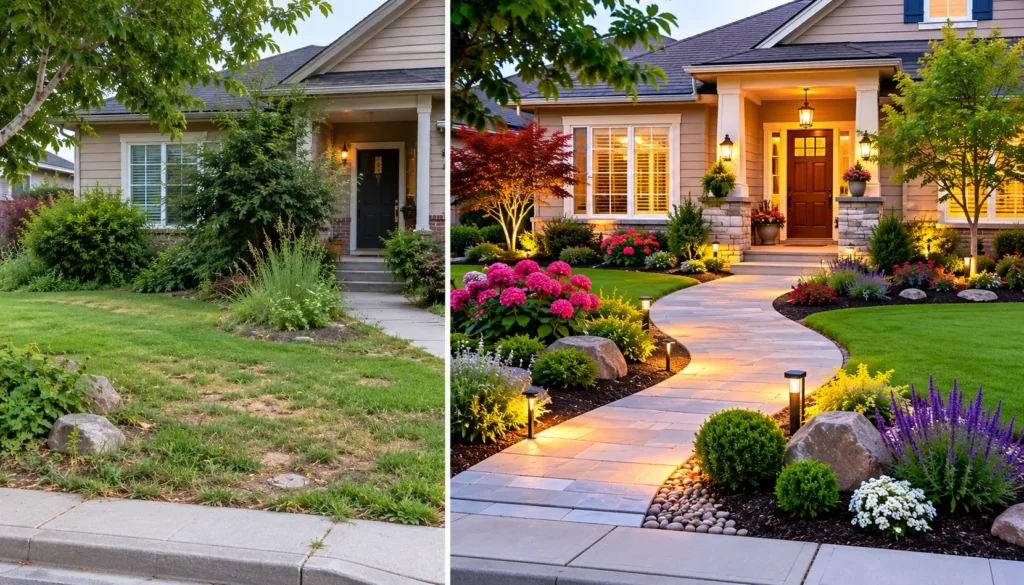
Table of Contents
Where to Start Landscaping Your Front Yard
Walk to the street. Turn around. Look at your house as if you have never seen it before. Take a photograph with your phone. This single action tells you more than hours of planning on paper or scrolling through Pinterest. That photograph shows you what every neighbor, delivery driver, and stranger passing by actually sees. It reveals what is working, what is not working, and where your eye naturally travels first.
From this point forward, follow nine deliberate steps. First, assess your yard and document its existing conditions. Second, define what your actual goal is and what your realistic budget allows. Third, sketch a simple zone layout directly on the yard. Fourth, call 811 before any digging happens. Fifth, prepare and amend the ground. Sixth, choose plants matched to your zone and light, not to what looks pretty. Seventh, install all the hardscape before planting anything. Eighth, plant correctly and mulch thoroughly. Ninth, water consistently through the entire first growing season.
That is the entire framework. What follows is the detailed walkthrough of each step, so nothing surprises you halfway through and nothing gets skipped.
Step One: Walk to the Street and Honestly Assess Your Yard
Understanding the Power of Objective Observation
The first step in landscape a front yard step by step is also the most undervalued and overlooked step. It costs nothing and it requires no equipment. You are simply going to walk to the edge of your property line, turn around, and look at your home and yard as an objective observer.
Most homeowners stop truly seeing their own front yard. You pull into the driveway multiple times every day and your brain stops processing what it is seeing. The overgrown foundation shrubs that have not been trimmed in years become invisible. The patchy lawn that is more weed than grass becomes normal. The cracked and crumbling edge where the planting bed meets the lawn becomes something you step over without thinking. The entry path that does not feel welcoming or well-defined becomes just the way it is. This psychological adaptation, while useful in many contexts, is terrible when you are trying to improve something.
This step forces you to see your yard the way everyone else actually sees it. Stand at the sidewalk or the edge of the street if that is safe. Take three to five photographs with your phone, capturing the full front facade and each side of the house. Then go back inside and look at those photos on a screen. Looking at your yard through a phone screen rather than with your own eyes creates psychological distance. You will suddenly notice mismatched plant heights that you have not seen in years. You will see the bare patches where color should be. You will notice the entry path that does not have a clear definition. You will see the gaps where structure or visual weight is missing.
Documenting Sun, Shade, and Light Conditions
Sun and shade patterns are critical to your landscaping success. Walk your yard at morning, midday, and late afternoon if you can. Note which areas receive full sun, which fall into partial shade, and which remain in deep shade all day long. Full sun means six or more hours of direct sunlight each day. Partial shade means three to six hours of direct sun, often with dappled shade from trees or filtered light. Deep shade means fewer than three hours of direct sun, typically found under mature trees or on the north side of structures.
This matters because most flowering plants and shrubs require at least some direct sun. Planting a sun-loving shrub in a shaded location will result in sparse growth, poor flowering, and eventual decline. You will have wasted money and effort. Conversely, shade-loving plants planted in full sun often scald, fade, and struggle. Knowing your light conditions before you buy a single plant prevents this common and expensive mistake.
Assessing Slope, Drainage, and Water Flow
Slope and drainage patterns are equally important. Is your yard flat and level, or does it slope away from the house, toward the house, or to one side? Walk the property after a heavy rain and note where water pools and where it flows freely. If water consistently pools in one area, you have a drainage problem that will either kill plants or require special solutions like raised beds or French drains. If water drains well everywhere, you have more freedom in your plant choices.
Evaluating Soil Type and Composition
Soil type determines how you will need to amend the ground. Grab a handful of soil from several spots in your yard when the soil is slightly damp, not soaking wet and not bone dry. Squeeze it firmly. If it crumbles immediately and will not hold any shape, you have sandy soil that drains very quickly but does not retain moisture or nutrients well. If it holds a firm, dense shape and feels sticky or clay-like, you have clay soil that retains moisture but compacts easily and drains poorly. If it falls gently apart and feels slightly crumbly without being sticky, you have loam, which is the ideal soil texture. Most yards have a combination. Your soil type determines your amendment strategy and which plants will thrive long-term in your soil without constant coddling.
Cataloging Existing Plants and Features
Document what is already there. Make a list of every existing plant. Note which ones are healthy and attractive, which ones are struggling, and which ones are dead or so overgrown they are beyond saving. There is no rule that says you must remove and replace everything. Sometimes the smartest move is keeping a healthy mature shrub or tree and working around it, removing three problem plants and refreshing the surrounding plantings, or simply tidying up what exists. Salvaging existing plants that work saves you significant money and allows your new plantings to fill in around established features.
Write all of this down before moving to the next step. Even rough notes and a few phone photos are enough to build a strong plan that works with your yard rather than against it.
Step Two: Define Your Goal, Your Budget, and Your Maintenance Reality
Clarifying Your Primary Landscaping Goal
This step separates the homeowners who eventually enjoy their front yards from the ones who feel frustration and guilt every single time they pull into the driveway. This step has nothing to do with aesthetics. This step has everything to do with honesty and self-knowledge.
Before you make a single design decision or pick a single plant, answer these three questions as honestly as you possibly can.
What is my actual primary goal for this front yard?
Your goal determines everything that follows. It is the north star that keeps you focused. If your goal is to create a warmer, more welcoming entry to your home, you will concentrate your effort and investment on the path, the front door area, the porch plantings, and the foundation plantings that frame the house. If your goal is front yard landscaping for beginners that requires minimal ongoing maintenance and water use, you will lean heavily toward easy front yard landscaping solutions like rock and gravel beds, drought-tolerant shrubs and perennials, and ground covers instead of traditional lawn. If your goal is privacy and screening from street traffic and neighbors, you will prioritize layered shrubs, ornamental grasses, and hedge lines. If your goal is simply to refresh a tired yard that once looked good, fresh mulch, clean edges, and a few thoughtfully placed plants will accomplish more than you expect.
Pick one or two primary goals and design everything toward those goals. Trying to accomplish everything at once, trying to please everyone, trying to create a yard that is beautiful and low-maintenance and private and colorful and formal and casual and traditional and modern all at the same time, leads to a yard that accomplishes nothing particularly well.
Establishing a Realistic Budget Framework
Easy front yard landscaping does not require a large budget, but it does require an honest one. Here is a realistic range to help you calibrate your expectations.
A basic front yard refresh, which includes fresh mulch, clean edging, new plant beds, and five to ten new plants, typically costs between three hundred and six hundred dollars if you do all the labor yourself. Home Depot and Lowe’s runs around four to six dollars per bag for mulch, two dollars per linear foot for edging, and ten to fifty dollars per plant depending on size and species.
A more significant project that includes a defined path, gravel or ground cover areas, fifteen to twenty plants of various sizes, and possibly some hardscape elements like pavers or a retaining wall under two feet tall typically costs between eight hundred and two thousand dollars. This is still achievable for most homeowner budgets if you spread it across two seasons.
A complete front yard redesign with new significant hardscape like stepping stone paths, raised beds, retaining walls, mature specimen plants, and possibly a simple irrigation system can run from two thousand five hundred dollars and upward. Many homeowners spend five thousand to ten thousand dollars on a complete professional redesign.
The smartest approach for most homeowners is phasing. Tackle the most visible area from the street in the first season. Save the side yard for the second season. Finish the less-visible areas in season three. This approach spreads the financial burden, keeps the project manageable so you do not become overwhelmed, and allows you to learn as you go. You will also be more motivated to complete the next phase after seeing the results of the first phase.
Assessing Your Weekly Maintenance Capacity
How much time am I willing to spend maintaining this yard every single week?
This is the question most homeowners skip entirely, and it is the reason so many front yards look beautiful in May and thoroughly exhausted by July. Before you make any other decisions, be brutally honest with yourself.
If you work full time in an office, travel regularly, have children who require your time and attention, or have limited physical ability, a yard that requires two hours of weekly maintenance is not realistic for you, no matter how beautiful it looks in magazine photographs. A rose garden is gorgeous and requires about two hours of weekly care between deadheading, pruning, and disease management. A bed filled with ornamental grasses, sedums, and shrubs might need thirty minutes of attention every couple of weeks once established. That is a radically different commitment.
A rock and succulent bed with a few hardy shrubs requires almost no maintenance beyond an initial mulch refresh every few years. A traditional lawn with perennial beds requires regular mowing, edging, weeding, and seasonal maintenance. A tropical plant collection requires frequent watering, pest management, and protective measures in cold weather.
Match your yard to your actual life and your actual available time, not to your aspirations or to what you see on television. A low-maintenance yard that you actually enjoy all season long is infinitely better than a beautiful yard that makes you feel guilty and frustrated by mid-summer.
Step Three: Sketch a Simple Zone Layout
Understanding the Five Core Zones of Front Yard Design
You do not need a degree in landscape design. You do not need expensive drafting software. You do not need a professional blueprint. You need a piece of paper and a pencil, or a garden hose and a can of spray paint.
Almost every residential front yard breaks naturally into five distinct zones, and once you understand these zones, they become the template for everything you design.
The Approach Zone: Your Entry Path and Welcome
The approach zone is the path and entry area, the route from the street or driveway to your front door. This is the single most important zone in your entire front yard. It sets the tone and the emotional experience for everyone who enters your home. A clear, well-defined, well-lit approach makes a home feel welcoming, cared for, and secure. An unclear approach, one without definition or lighting, makes even a beautiful home feel unwelcoming.
The Foundation Beds: Framing Your Home
The foundation beds are the planting areas immediately adjacent to the front and sides of your house. These beds frame the structure, soften the hard architectural lines, add color and texture, and do more for curb appeal than almost any other single element in the yard.
The Anchor Points: Creating Visual Focus
The anchor points are one or two focal features that give the yard visual weight and provide a destination for the eye. An anchor point might be a specimen tree, a statement shrub, a large decorative planter, a water feature, a seating area, or a garden structure. Anchor points prevent a yard from looking random and scattered.
The Open Space: Lawn, Gravel, or Ground Cover
The open space is the area between your beds and features. This might be lawn, gravel, ground cover, hardscape, mulch, or a combination. Even if you are pursuing easy front yard landscaping without grass, this zone exists. You are simply filling it differently.
The Edges and Borders: Creating Clean Definition
The edges and borders are the defined lines where your beds end and your lawn or path begins. Clean, crisp edges are one of the highest-return, lowest-cost improvements you can make to any front yard. They make everything look intentional and cared for.
Marking Your Layout for Visualization
Once you have a rough sketch on paper showing these five zones, take the sketch outside. Use a garden hose to mark out your layout directly on the ground. If you have lawn-marking paint available from Home Depot for five to eight dollars, you can spray the layout directly on the grass. Walk inside and look at the layout from the interior windows. Step back to the street and evaluate how it looks from the public view. Make adjustments while it is still free and easy to do so, before any digging or planting.
Step Four: Call 811 Before You Dig Anything
The Critical Safety Requirement
This step is not a formality. This step is not optional. This step is a critical safety requirement that protects you, your neighbors, and your property.
811 is the United States Call Before You Dig hotline. Before any digging whatsoever, including planting a single shrub, installing edging, or driving a stake into the ground, you must call 811 or visit 811.com and request a free underground utility locate. Within a few business days, utility companies will send technicians to your yard to mark the locations of underground gas lines, electric lines, water lines, and cable lines using color-coded flags and paint.
Understanding the Dangers of Hitting Utility Lines
Hitting a gas line while digging is dangerous and can cause explosions or leaks. Hitting an electric line is dangerous and can cause electrocution. Hitting a water line causes flooding. Repairing any of these is expensive, running hundreds to thousands of dollars. In most U.S. states, you are legally and financially liable for any damage you cause if you failed to call 811 before digging.
The call is completely free. It takes two minutes to make. Request your locate at least three business days before you plan to begin any ground work. There is literally no good reason to skip this step.
Step Five: Prepare the Ground
Clearing Existing Vegetation and Debris
With your layout marked on the yard and your utility lines flagged, it is time to prepare the areas where you will be planting. This step is not glamorous or fun. It is, however, what separates a yard that holds up beautifully for years from one that looks fantastic in spring and falls apart by fall.
Clear existing vegetation first. Remove dead plants by cutting them at the root with pruners or a sharp spade and pulling out the entire root ball. Pull weeds by the root, not just the stems. A flat-head spade is excellent for this task. If you are removing existing lawn to convert it to a planting bed or to pursue a no-grass design, you have two practical options.
Lawn Removal Method One: Smothering with Cardboard
The first is smothering, which is cheap and requires minimal physical effort but takes time. Lay sheets of cardboard directly on the grass, overlapping the edges by at least six inches. Cover it with four to six inches of wood chip mulch. The grass beneath dies over two to three months. This method costs about two to four dollars per ten square feet.
Lawn Removal Method Two: Sod Cutting for Immediate Results
The second is cutting, which works immediately but requires more physical effort and equipment rental. Rent a sod cutter from Home Depot or Lowe’s for seventy to ninety dollars per day. A sod cutter removes the top two to three inches of turf in clean strips, which you can then roll up and dispose of, compost, or offer to neighbors.
Amending Your Soil for Optimal Plant Growth
After clearing the area, consider amending your soil if testing revealed poor conditions. If your soil is dense clay or very sandy, working two to three inches of compost into the top six to eight inches of soil before planting significantly improves plant establishment and long-term health. A forty-pound bag of compost at Lowe’s runs approximately seven to twelve dollars. You do not need to amend your entire yard, just the areas where you plan to plant shrubs and perennials.
Skip soil amendment in gravel and rock zones. It serves no purpose there and creates unnecessary work.
Step Six: Choose Plants That Match Your Conditions, Not Your Taste
Starting with USDA Plant Hardiness Zones
This is the step where most front yard landscaping for beginners goes wrong. A plant that looks absolutely beautiful at the garden center in May will be dead by August if it is not matched to your zone, your light conditions, and your soil type. Buying incorrect plants is the most common and most expensive mistake beginners make.
Start with your USDA Plant Hardiness Zone. Your zone tells you which plants can survive your winter temperatures. Find your zone by visiting planting.usda.gov and entering your zip code. Every plant tag at every garden center displays the zone range it requires. If a plant is not rated for your zone, do not buy it for a permanent bed. Annual flowers are fine for seasonal color, but permanent shrubs and perennials must be zone-appropriate.
Matching Plants to Full Sun Conditions
Next, match your plant choices to your specific light conditions, which you documented in Step One.
For full sun areas receiving six or more hours of direct sun daily, excellent choices include lavender, which grows in Zones 5 through 9, is drought tolerant once established, and repels insects. Russian sage thrives in Zones 4 through 9 with nearly no care. Ornamental grasses such as Blue Oat Grass or Karl Foerster Feather Reed Grass provide year-round structure and movement. Sedum varieties tolerate heat, drought, and poor soil remarkably well across multiple zones.
Selecting Plants for Partial Shade Areas
For partial shade areas receiving three to six hours of sun daily, hydrangeas are reliable performers. Endless Summer grows in Zones 3 through 8 and produces flowers all season. Little Lime is a compact variety perfect for smaller spaces in Zones 3 through 8. Hostas fill shaded spaces beautifully in Zones 3 through 9 and require minimal maintenance. Coral bells, also called Heuchera, provide year-round color in partial shade in Zones 4 through 9.
Planting in Deep Shade Environments
For deep shade areas receiving fewer than three hours of direct sun, ferns are adaptable and low-maintenance across wide zone ranges. Liriope, also called Lilyturf, grows in Zones 5 through 10 and makes an excellent ground cover under trees. Pachysandra is a reliable ground cover for deep shade in Zones 4 through 8.
The Proven Beginner Plant Starter List
A proven beginner starter plant list includes several varieties widely available at Home Depot and Lowe’s that are hardy, forgiving, and nearly impossible to kill even with beginner mistakes.
Knock Out Rose is a flowering shrub that grows in Zones 4 through 11, tolerates full sun, requires almost no special care, and blooms continuously from spring through frost without deadheading.
Stella de Oro Daylily grows in Zones 3 through 10, produces bright yellow flowers continuously all season, and multiplies on its own year after year. Each flower lasts one day, hence the name, but new flowers appear constantly.
Black-Eyed Susan grows in Zones 3 through 9, loves full sun, attracts pollinators, and is one of the toughest native perennials available. It self-seeds enthusiastically, which means it spreads.
Little Lime Hydrangea is a compact shrub that grows in Zones 3 through 8 and produces beautiful lime-green flower clusters through summer that fade to pink in fall.
Blue Oat Grass grows in Zones 4 through 9, provides silvery-blue color all season, and needs almost no attention after its first year once established.
Creeping Phlox grows in Zones 3 through 9, creates a dense, colorful carpet along edges and borders with very little water or care, and blooms in spring with pink, purple, or white flowers.
Understanding Proper Plant Spacing
When spacing plants, give most shrubs three to five feet of space between them. Give perennials and ornamental grasses one to three feet of space. Beds look sparse at first planting, but they fill in within one to two growing seasons. Overcrowding is a common beginner mistake that leads to disease, poor air circulation, fungal issues, and plants competing for sunlight.
Step Seven: Install Hardscape Before You Plant
The Importance of Building Hardscape First
If your plan includes a new path, edging, a low retaining wall, or gravel areas, install these elements before any plants go in the ground. Digging and moving materials after plants are established damages roots and disturbs young plants. Installing hardscape first creates a clean, defined space to plant into.
Selecting Path Materials and Dimensions
For paths, a three-foot width feels generous, welcoming, and practical for two people to walk side by side. Common materials include concrete pavers at eighty to one hundred and fifty dollars for a ten-foot section, natural flagstone at one hundred to two hundred dollars, and gravel with metal edging at forty to eighty dollars. Stepping stones are the most budget-friendly at thirty to sixty dollars.
Installing Bed Edging for Clean Definition
For bed edging, steel or aluminum landscape edging is one of the best investments you can make. A twenty-foot roll runs twenty to forty dollars at any home improvement store. It creates a sharp, clean line between planting beds and lawn or path, keeps mulch contained, and makes the entire yard look polished and intentional.
Creating Gravel and Rock Beds with Longevity
For gravel and rock areas, lay landscape fabric underneath before adding stone. This suppresses weeds without chemicals and extends the life of rock beds significantly. Landscape fabric costs ten to twenty-five dollars per roll.
When to Hire a Professional for Hardscape
Retaining walls taller than two feet are structural elements that may require permits and professional installation in most U.S. areas. Any landscape lighting connected to your home’s electrical system should be installed by a licensed electrician. Drainage work that changes how water flows across your property is best handled by a professional.
Step Eight: Plant, Mulch, and Finish
The Correct Method for Planting Shrubs and Perennials
Now comes the rewarding part that makes all the preparation worth the effort.
To plant correctly, dig a hole that is twice as wide as the nursery pot and exactly the same depth. No deeper. This is critical. Planting too deep is one of the most common causes of plant death. Remove the plant from its container and gently loosen any roots circling the bottom of the pot. Set the plant in the hole so the top of the root ball sits level with or very slightly above the surrounding soil. Backfill with the soil you removed. No need to add fertilizer or soil amendment to the planting hole unless your native soil is extremely poor. Water deeply immediately after planting. That means a slow, thorough soak, not a quick sprinkle.
The Critical Role of Mulch in Yard Success
Once all your plants are in the ground, mulch every planting bed with two to three inches of shredded hardwood mulch. This single step accomplishes three critical things for your yard’s success. It locks in soil moisture so you water less often. It suppresses weeds so you spend less time pulling them. And it gives every bed a finished, polished appearance that elevates the entire yard.
A two-cubic-foot bag of shredded hardwood mulch covers approximately eight square feet at three inches deep and costs four to six dollars at Home Depot or Lowe’s. Calculate the square footage of your beds and budget accordingly.
One essential rule when mulching: keep all mulch two to three inches away from plant stems and tree trunks. Piling mulch against stems traps moisture, promotes rot, invites pests and disease, and kills plants. This is called a mulch volcano and it is responsible for more plant deaths than most homeowners realize.
Finishing Details that Elevate Your Yard
After mulching, attend to finishing details. Use a half-moon edger or a flat spade to cut a clean, sharp line along every bed border. Sweep the path and driveway clean. Add a doormat or a potted plant at the front door if it needs visual softness. Make sure your house numbers are clearly visible from the street. These small details signal to every passerby that someone cares about this home. That is the entire point of curb appeal.
Step Nine: Water Consistently Through the First Growing Season
Understanding New Plant Water Needs
The most common reason new plants die is not the wrong plant choice and it is not bad soil. It is inconsistent watering during the first growing season while the plants are establishing their root systems.
New plants have not grown roots deep enough to find water independently. They depend on you for the first several months, more than they ever will again. Miss a few waterings during a hot stretch and you can lose plants that were healthy weeks earlier.
The First Month: Critical Daily and Twice-Daily Watering
For the first four weeks after planting, water every two to three days. In hot weather above ninety degrees, water every day. Give each plant a deep, slow soak at the base of the root ball.
Months Two and Beyond: Tapering Your Watering Schedule
From months two and three onward, taper to once or twice a week. By the end of the first full growing season, most established plants, especially native and drought-tolerant varieties, will need little to no supplemental watering.
Using Soaker Hoses for Efficient Watering
A soaker hose laid through your beds is the most efficient way to water new plantings. It delivers water slowly and directly to the root zone where it is needed. A fifty-foot soaker hose costs twenty to thirty dollars at Lowe’s or Home Depot.
Set a reminder on your phone for watering days during that critical first month. Forgetting to water is easy and the stakes are real.
How to Landscape the Front of Your House: The Complete Checklist
If you want one document to reference throughout your project, here is the full process in order.
Walk to the street and assess your yard honestly. Take photographs and document your sun, shade, slope, drainage, and soil conditions.
Define your goal, your realistic budget, and your actual maintenance capacity before making design decisions.
Sketch a simple zone layout covering your approach, foundation beds, anchor points, open space, and edges.
Call 811 at least three business days before any digging.
Clear dead plants and weeds and amend your soil with compost in planting beds if needed.
Check your USDA Plant Hardiness Zone and match every plant choice to your zone and light conditions.
Install all hardscape, meaning paths, edging, and gravel areas, before planting anything.
Plant your shrubs, perennials, and ground covers correctly and mulch every bed to two to three inches, keeping mulch away from stems.
Water deeply and consistently through the entire first growing season, tapering gradually as plants establish.
Understanding Timeline and Effort
A basic cleanup and planting project can be completed in one solid weekend, approximately eight to ten hours of continuous work. A more complete project with new paths, multiple planting beds, edging, and mulching typically takes two to four weekends spread over a month or two. The yard itself continues to develop and fill in over one to two growing seasons as plants establish their roots and spread into their allotted space.
Real Budget Breakdown Example
For a typical fifteen-hundred-square-foot front yard receiving a significant refresh, here is what you might expect to spend if you do the labor yourself.
Soil preparation and amendments: one hundred to two hundred dollars for compost and mulch materials.
Hardscape such as edging, pavers, or gravel: two hundred to five hundred dollars depending on scope.
Plants including shrubs, perennials, and ground covers: four hundred to eight hundred dollars depending on quantity and size.
Miscellaneous materials like soaker hose, landscape fabric, and tools: one hundred to one hundred and fifty dollars.
Total for a significant project: eight hundred to sixteen hundred dollars. This would typically be done in phases over one to two seasons rather than all at once.
Common Beginner Mistakes and How to Avoid Them
Planting too deep is the most common reason plants fail. The top of the root ball should sit level with the ground, not below it.
Overcrowding plants because small plants look lonely. They will fill in. Give them space.
Choosing plants for how they look instead of matching them to your zone and light. This causes repeated failure.
Mulching against tree trunks and plant stems. This causes rot and kills plants.
Watering inconsistently in the first growing season. New plants depend on you. Set a reminder.
Not calling 811 before digging. This is dangerous and potentially expensive.
Trying to accomplish all landscaping at once instead of phasing. Phase your projects over multiple seasons.
Planting shade plants in full sun or sun plants in shade. Match plants to conditions.
Conclusion
Landscaping the front of your house is one of the most satisfying home improvement projects you can undertake yourself. It is visible. It is tangible. It is permanent. Every single time you pull into your driveway, you will see the direct result of your work and effort. When you get it right, that feeling of pride is real and meaningful.
The key to success is sequence. Work in order, from assessment to plan to preparation to planting. Do not rush the early steps. Do not skip the small details, like calling 811 and keeping mulch away from stems. Those details are what separate a yard that holds up beautifully for years from one that needs redoing every single season.
You do not need to do everything at once. Start with the area most visible from the street. Get one section right. Build your confidence. Then move on to the next section. At Front Yard Landscaping Ideas, we believe every homeowner can build a front yard they are genuinely proud of, without a contractor, without a landscape design degree, and without spending every weekend maintaining it. This guide gives you the complete framework to do exactly that.
FAQs
Where should I start when doing front yard landscaping for beginners?
Start at the street, not in the dirt. Walk to the edge of your property, turn around, and photograph your house. That image shows you exactly what needs the most attention. Write down your sun conditions, soil type, slope, and drainage. Having that information before you make any plant purchases saves significant time, money, and frustration. This is the most important step.
What is the most cost-effective way to landscape a front yard?
The most budget-friendly approach is to start with what makes the biggest visual impact for the least money. Clean up and edge every existing bed. Lay fresh mulch across all planting areas. Add five to ten low-maintenance plants in the most visible spots. Knock Out Roses, Black-Eyed Susans, ornamental grasses, and creeping phlox are all excellent choices that are widely available, forgiving of beginner mistakes, and rewarding from season one. Phase larger projects over multiple seasons rather than doing everything at once.
How much does easy front yard landscaping cost?
A basic front yard refresh with fresh mulch, clean edging, and five to ten new plants typically costs between three hundred and six hundred dollars when you do the work yourself. A more involved project with a new path, gravel beds, and fifteen to twenty plants runs between eight hundred and two thousand dollars. Full redesigns with significant hardscape and mature plants can run two thousand five hundred dollars and up. Phasing projects over two or three seasons is the most budget-friendly strategy.
When should I landscape the front of my house?
The best times to plant are spring and fall when temperatures are moderate and moisture is naturally higher. You can plant in summer, but you will need to water more frequently. Avoid planting in late fall in cold climates where new plants will not have time to establish before winter. Plan hardscape installation in spring or fall when the ground is workable and temperatures are comfortable for physical work.
How long does the entire process take from start to finish?
A basic cleanup and planting project takes one to two weekends. A more complete project with hardscape takes three to six weekends spread over a month or two. The garden itself continues to fill in and develop for one to two full growing seasons as plants become established. You will see results immediately, but the full mature look develops over time.
Do I need to hire a professional landscaper?
Most of the work can absolutely be done by homeowners with no landscaping experience. Hire a professional for retaining walls taller than two feet, electrical work for landscape lighting, and complex drainage or grading. Everything else, including planting, mulching, basic hardscape, and edging, is well within reach for someone willing to do the work.
What plants work best if I have no gardening experience?
Knock Out Rose, Stella de Oro Daylily, Black-Eyed Susan, Little Lime Hydrangea, Blue Oat Grass, and Creeping Phlox are all nearly impossible to kill. They are forgiving of beginner mistakes, widely available, affordable, and beautiful. Always match your plant to your USDA zone and your light conditions before purchasing.
How do I choose which style of landscaping to pursue?
Define your goal first. Do you want curb appeal? Low maintenance? Privacy? Color? Once you know your goal, every other decision follows from that goal. A goal-focused approach prevents you from designing by committee and produces a cohesive yard.
Why is calling 811 so important?
Underground gas, electric, water, and cable lines run surprisingly shallow in many yards. Hitting one is dangerous and expensive. You are legally liable for damage in most states if you did not call first. The service is free and takes two minutes.
How do I know when my landscaping is actually finished?
Your landscaping is finished when the hardscape is installed, all plants are in the ground and mulched, and you have watered deeply after planting. However, the yard is not fully mature for one to two seasons. Do not judge success by how the yard looks in week one. Judge success by how it looks after the first full growing season.

Sara Bendrick believes your yard should be a place you actually look forward to coming home to. A licensed and bonded design-build contractor (C-27 #1006161), she founded Sarita Landscape Designs and has spent over twelve years designing residential outdoor spaces across Southern California with a real soft spot for curb appeal and low-water, no-lawn designs.
When she’s not on a job site, Sara’s on camera or on stage. She’s hosted yard-renovation shows including I Hate My Yard, Build It Like Bendrick, and Lawn & Order, written Big Impact Landscapes, given two TEDx talks, and serves as a spokesperson for Stihl. Her mission is simple, help people see the potential in the yard they already have.