
To DIY landscape a front yard, begin by measuring the space and studying its sunlight, soil, drainage, slope, and existing features. Create a simple landscape plan, decide where paths and planting beds will go, choose one clear focal point, prepare the soil, install hardscape elements, and then add trees, shrubs, flowers, groundcovers, mulch, and lighting. The smartest approach is to design first, prepare second, and plant last.
That may sound like a substantial project, but do it yourself front yard landscaping does not have to happen in one exhausting weekend. A good front yard grows in stages. You can begin with the entrance, improve the foundation beds next, and add finishing details as your time and budget allow.
This guide from Front Yard Landscaping Ideas walks you through the entire process, from evaluating your property and drawing a front yard landscape design to selecting plants and creating an attractive, low-maintenance outdoor space.
Table of Contents
What DIY Front Yard Landscaping Really Involves
DIY front yard landscaping is the process of planning, building, planting, and maintaining your outdoor entrance without handing the complete project to a professional landscape company.
It usually combines two main elements.
Hardscape includes the permanent or solid parts of the landscape, such as:
- Walkways
- Driveways
- Garden edging
- Retaining walls
- Steps
- Patios
- Gravel areas
- Fences
- Outdoor lighting
Softscape includes living landscape materials, such as:
- Trees
- Shrubs
- Perennials
- Annual flowers
- Ornamental grasses
- Groundcovers
- Lawn
- Hedges
- Container plants
A successful design makes these elements feel connected. The walkway should guide visitors naturally. The plants should soften the house without covering it. The lawn, beds, porch, driveway, and entrance should appear to belong to the same composition.
The goal is not to fill every empty space. It is to create structure, balance, and a welcoming sense of arrival.
Start With a Front Yard Site Assessment
Before looking at plants or buying bags of mulch, study what is already happening in your front yard. This step prevents expensive mistakes and gives your landscape plan a practical foundation.
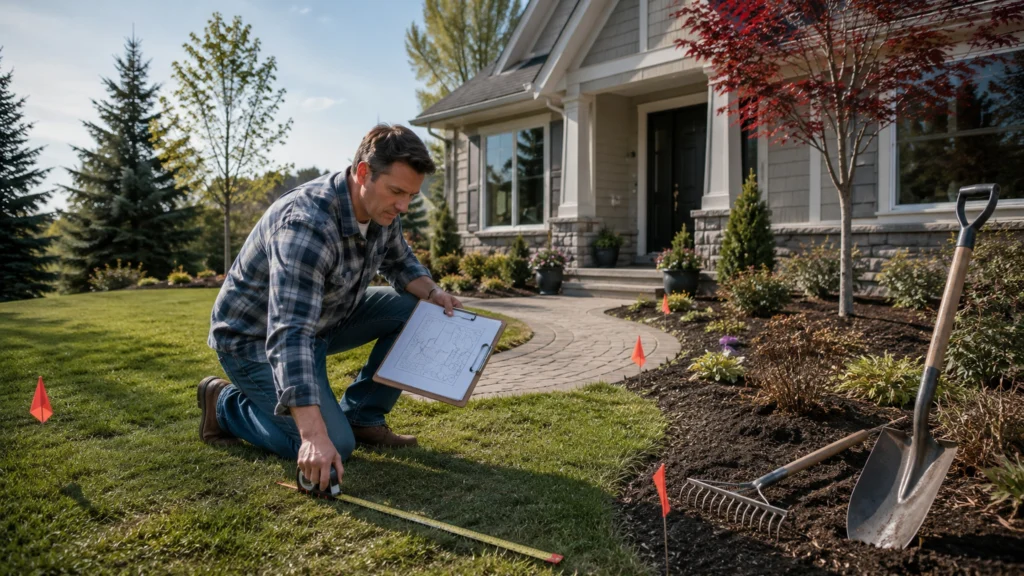
Measure the Property
Measure the approximate length and width of the yard. Mark the location of the house, driveway, sidewalk, front steps, porch, utility boxes, trees, downspouts, and existing beds.
You do not need professional design software. Graph paper, a pencil, and a measuring tape are enough for a basic DIY landscape design.
Include the following features on your sketch:
- Property boundaries
- Doors and windows
- Walkways and steps
- Driveway edges
- Existing trees and shrubs
- Drainage areas
- Utility locations
- Outdoor faucets
- Mailbox and street access
- Areas that need privacy or screening
Check for underground utilities before digging deeply or installing posts, large trees, drainage lines, or irrigation.
Observe Sunlight
Watch the yard at different times of day. A space that appears sunny in the morning may be shaded by the house in the afternoon.
Most plants fall into three broad light categories:
Full sun areas usually receive direct sunlight for much of the day.
Partial sun or partial shade areas receive a mixture of direct light and shade.
Full shade areas receive limited direct sunlight.
Sun exposure affects plant growth, flowering, water needs, and long-term maintenance. Landscaping ideas for the front of a house in full sun will require different plants from a north-facing foundation bed that remains cool and shaded.
Check Soil and Drainage
Healthy landscaping begins below the surface. Dig into the soil in several locations and examine its texture.
Heavy clay soil feels dense and may hold water for too long. Sandy soil drains quickly but may not retain nutrients. Loamy soil has a more balanced mixture of mineral particles and organic matter.
Look for:
- Standing water after rain
- Dry, compacted ground
- Exposed tree roots
- Erosion
- Water flowing toward the foundation
- Downspouts emptying into planting beds
- Low areas near walkways
Correct drainage problems before installing expensive plants. Adding more plants to a waterlogged bed will not solve the underlying issue.
Identify What Should Stay
A DIY renovation does not require removing everything. A mature tree, healthy evergreen, established hedge, or well-built walkway may already provide valuable structure.
Ask four questions about each existing feature:
- Is it healthy?
- Is it in the right location?
- Does it support the new design?
- Will it become too large for the space?
Keeping the right elements saves money and helps the new landscape look established sooner.
Define Your Landscaping Goals
A clear goal makes plant selection and budgeting much easier. Decide what you want your front yard to do before deciding how it should look.
Your priorities may include:
- Improving curb appeal
- Reducing lawn maintenance
- Adding seasonal color
- Creating privacy
- Making the entrance easier to find
- Controlling erosion
- Replacing struggling grass
- Improving drainage
- Creating a sitting area
- Making a small yard feel larger
Choose two or three primary goals rather than trying to solve everything at once.
For example, your goal might be to create low-maintenance front yard landscaping with a more visible walkway and year-round greenery. That simple statement gives the entire project direction.
Set a Realistic DIY Landscaping Budget
Cheap simple front yard landscaping ideas work best when the budget is assigned to the features that create the greatest visual impact.
Divide your budget into five categories:
- Soil preparation and compost
- Hardscape and edging
- Trees, shrubs, and smaller plants
- Mulch or gravel
- Irrigation and finishing details
Allow some flexibility for unexpected costs. Old roots, poor soil, broken drainage pipes, extra delivery fees, or additional materials can change the final total.
When money is limited, complete the project in phases.
A sensible order is:
- Correct drainage and grading problems.
- Repair essential paths and steps.
- Define the planting beds.
- Plant trees and structural shrubs.
- Add perennials and groundcovers.
- Finish with mulch, containers, and lighting.
This phased approach is often more successful than purchasing many inexpensive plants without a complete plan.
Create a DIY Front Yard Landscape Design
Your landscape design does not need to be complicated, but it should show where the major elements will go.
Start with your property sketch and create several rough versions before choosing one.
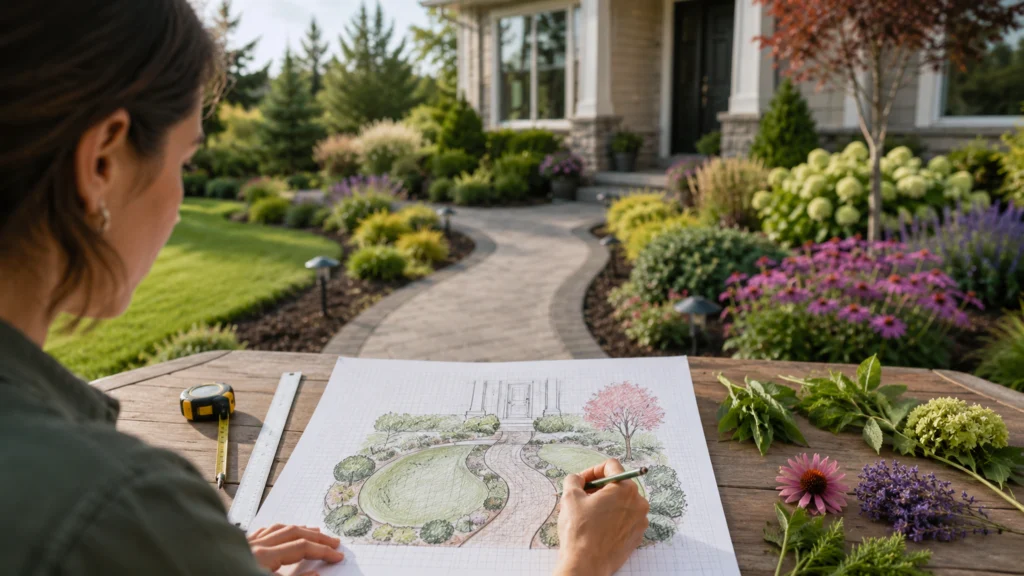
Choose a Landscape Style
The landscape should relate to the architecture of the house.
A modern home may suit clean lines, restrained plant varieties, ornamental grasses, and simple geometric beds.
A cottage-style home may work well with curved borders, flowering perennials, climbing plants, and informal layers.
A traditional home often looks balanced with evergreen shrubs, symmetrical foundation planting, and a clearly defined walkway.
A rustic design may include natural stone, native plants, timber edging, and relaxed plant groupings.
You do not have to follow one style rigidly. The purpose of choosing a direction is to prevent the yard from becoming a collection of unrelated ideas.
Establish a Focal Point
A focal point gives the eye somewhere to land. Without one, the front yard may feel scattered.
Useful front yard focal point ideas include:
- A distinctive front door
- A specimen tree
- A large container near the entrance
- A small ornamental tree
- A garden bench
- A sculptural shrub
- An attractive mailbox garden
- A pair of matching planters
- A well-designed porch
- A curved path leading to the entrance
The front door is usually the natural focal point. Plants and paths should support it rather than compete with it.
Use Repetition
Repeating a plant, material, shape, or color creates visual unity.
Instead of planting one of everything, use groups of the same plant. Repeat the same ornamental grass along the walkway. Use one edging material around multiple beds. Carry a flower color from the mailbox garden to the porch containers.
Repetition makes inexpensive landscaping look intentional.
Consider Scale and Proportion
Plants and structures should be appropriately sized for the house and yard.
A tiny shrub may disappear beside a two-story home. An oversized tree can overwhelm a small front yard. A narrow path may look uncomfortable beside a broad entrance.
Consider the mature size of every plant, not just its size at the garden center. Leaving enough room at planting time can feel strange, but overcrowding creates more maintenance and often forces plants into unnatural shapes.
Balance the Design
Symmetrical landscaping places similar elements on both sides of a central feature. It can feel formal, calm, and traditional.
Asymmetrical landscaping uses different elements with similar visual weight. A small tree on one side of the entrance might be balanced by a grouping of shrubs and ornamental grasses on the other.
Both approaches can work. The important point is that one side should not feel empty while the other appears overloaded.
Divide the Front Yard Into Functional Zones
A front yard becomes easier to plan when it is divided into practical areas.
Common zones include:
- The entrance and front steps
- The foundation planting
- The walkway
- The driveway edge
- The lawn or open space
- The mailbox area
- The property boundary
- A porch or seating area
- A utility screening area
- A slope or drainage zone
Each zone has a different purpose.
The entrance should feel open and welcoming. Foundation beds should soften the building. Boundary planting may create privacy. A driveway bed should remain low enough to preserve visibility. Utility screening should conceal equipment without blocking access.
Thinking in zones is especially helpful when developing a landscape design for a small front yard.
Plan the Hardscape Before Planting
Hardscape forms the skeleton of the landscape. It is generally easier to install paths, steps, edging, drainage, and retaining structures before adding delicate plants.
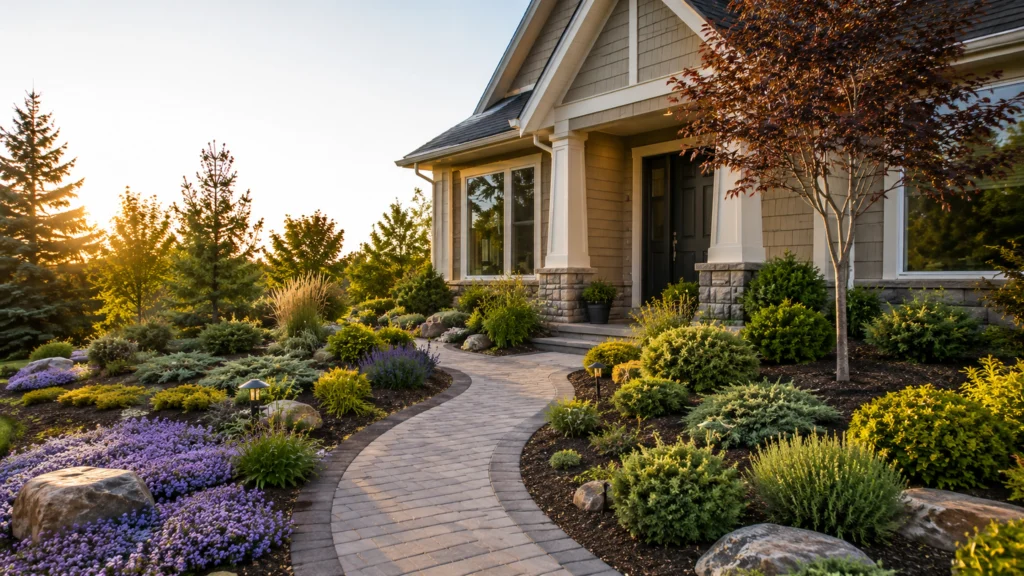
Improve the Front Walkway
The walkway should provide a clear, comfortable route from the street or driveway to the front door.
A good front path should:
- Be easy to see
- Feel wide enough for comfortable use
- Avoid unnecessary obstacles
- Remain stable in wet weather
- Connect naturally with the driveway or sidewalk
- Lead attention toward the entrance
Concrete is practical and durable. Brick has a traditional character. Natural stone creates a softer, more organic appearance. Gravel can be affordable, although it needs secure edging and occasional maintenance.
A gentle curve can add interest, but avoid creating an exaggerated route that people will be tempted to shortcut.
Define Planting Beds
Clear bed edges make a front yard look maintained even when the planting is simple.
Beds can be edged with:
- Cut lawn edges
- Metal edging
- Brick
- Stone
- Concrete borders
- Composite edging
Use broad, confident lines rather than many small curves. Narrow beds often leave too little room for layered planting and can make shrubs feel pressed against the house.
Connect the Porch to the Landscape
Front porch landscaping ideas should make the porch feel like part of the garden rather than a separate platform attached to the house.
You can connect the porch by:
- Extending planting beds toward the steps
- Repeating porch colors in nearby flowers
- Placing containers near the entrance
- Using low plants beside railings
- Adding a small tree near one corner
- Continuing the walkway material into the porch area
Keep plants away from doors, handrails, and frequently used paths.
Landscape Along the Driveway Carefully
Front yard with driveway landscaping ideas should improve the view without creating visibility problems.
Choose low plants near the street and driveway entrance. Taller shrubs can be placed farther back, where they will not block drivers or pedestrians.
Durable options often include groundcovers, compact shrubs, ornamental grasses, and drought-tolerant perennials. Plants beside pavement may experience additional heat, reflected light, road salt, or compacted soil, so select species suited to tougher conditions.
Manage Slopes Before Decorating Them
Sloped front yard ideas on a budget should focus first on erosion control and safe access.
Possible solutions include:
- Deep-rooted groundcovers
- Terraced planting beds
- Timber or stone steps
- Retaining walls
- Mulched planting zones
- Shrubs planted in staggered groups
- Water-diverting channels
- Carefully placed boulders
Do not rely on loose mulch alone on a steep slope. Heavy rain can wash it downhill. Plants with spreading roots, erosion-control materials, and properly designed terraces provide greater stability.
Select the Right Plants for the Front Yard
The best plant is not simply the prettiest one at the garden center. It is the plant that fits the light, soil, climate, available space, and maintenance level of your property.
Use the principle of right plant, right place.
Begin With Structural Plants
Structural plants give the landscape shape throughout the year.
These may include:
- Small ornamental trees
- Evergreen shrubs
- Deciduous flowering shrubs
- Upright grasses
- Hedges
- Broadleaf evergreens
Place these plants first. They establish the framework around which smaller perennials and flowers can be arranged.
Layer the Foundation Planting
Foundation planting softens the transition between the house and the ground.
A simple layered bed may include:
- Taller shrubs or small trees near blank walls
- Medium shrubs through the middle of the bed
- Perennials and ornamental grasses in front
- Groundcovers or low edging plants near the border
Avoid placing tall plants directly in front of windows, vents, meters, or architectural details. Shrubs should frame the house, not conceal it.
Choose Trees With Mature Size in Mind
A front yard tree can provide shade, structure, privacy, and seasonal interest. It can also become a serious problem when planted too close to the house, pavement, overhead wires, or underground services.
Before planting a tree, consider:
- Mature height
- Mature canopy width
- Root behavior
- Growth rate
- Leaf and fruit drop
- Sun requirements
- Resistance to local pests
- Distance from structures
For a small front yard, select a compact ornamental tree rather than a large shade tree that will eventually dominate the property.
Use Shrubs for Year-Round Form
Shrubs help connect the height of the house to lower flowers and groundcovers.
A useful shrub mix may include:
- Evergreens for winter structure
- Flowering shrubs for seasonal color
- Compact shrubs for foundation beds
- Screening shrubs for utilities
- Low shrubs for walkways and driveway edges
Avoid planting a row of identical shrubs simply because they are available in bulk. Consider how the group will look after several years of growth.
Add Perennials for Recurring Color
Perennials return for multiple growing seasons and are useful for low cost, low-maintenance front yard landscaping.
Select a mixture with different flowering times so the garden does not peak for two weeks and then look empty.
Combine:
- Spring-flowering perennials
- Summer bloomers
- Late-season flowers
- Plants with attractive seed heads
- Evergreen or semi-evergreen foliage
Plant perennials in groups rather than isolated dots. Groups are easier to see from the street and create a stronger visual effect.
Use Annuals Strategically
Annual flowers provide quick color but generally need to be replanted.
Instead of filling the entire yard with annuals, use them in high-impact areas such as:
- Porch containers
- Window boxes
- The mailbox bed
- The front edge of a walkway
- Small gaps between young perennials
This keeps seasonal maintenance manageable.
Include Groundcovers and Ornamental Grasses
Groundcovers can suppress weeds, protect soil, and replace difficult sections of lawn. Ornamental grasses bring movement, texture, and vertical form.
Choose noninvasive varieties suitable for your region and give them enough room to reach their mature spread.
Consider Native and Climate-Appropriate Plants
Plants adapted to local conditions often require less intervention once established. They may cope better with regional rainfall, temperature changes, soil types, and local wildlife.
Native does not automatically mean maintenance-free, but climate-appropriate planting can reduce unnecessary watering, fertilizing, and replacement.
Design Front Yard Flower Beds
Front lawn flower bed ideas work best when the bed has a strong shape and a simple plant palette.
A reliable flower bed formula includes:
- One structural shrub or small tree
- Two or three repeated perennial varieties
- One ornamental grass
- A low groundcover
- Seasonal flowers in selected gaps
For low-maintenance flower bed ideas in front of the house, limit the number of plant varieties. A restrained combination is easier to care for and usually looks more sophisticated than a crowded assortment.
Choose plants that share similar requirements. Mixing a moisture-loving plant with a drought-tolerant plant in the same small bed makes watering difficult.
Prepare the Soil and Planting Beds
Good soil preparation is less exciting than buying flowers, but it often determines whether a DIY landscape succeeds.
Remove Weeds and Unwanted Grass
Remove established weeds before planting. Dig out persistent roots rather than cutting off only the visible growth.
When converting lawn into a planting bed, you can remove the sod manually or use a slower smothering method with cardboard and organic material. The best approach depends on the project timeline and the type of grass.
Improve the Soil
Add compost or suitable organic matter when the soil needs better structure. Avoid adding excessive amendments to individual planting holes, as plant roots should eventually grow into the surrounding soil.
A soil test can help identify nutrient problems and unsuitable acidity or alkalinity. Apply fertilizer only when the soil or plants genuinely require it.
Correct the Grade
Water should move away from the house rather than collecting near the foundation. Correct low spots and drainage problems before covering the soil with mulch.
Do not bury siding, vents, or foundation details when raising bed levels.
Lay Out Plants Before Digging
Place plants in their containers on top of the soil. Step back and view the arrangement from the street, front door, driveway, and windows.
Check the spacing and balance before digging. It is much easier to move a pot than a planted shrub.
Install Your DIY Landscape in the Right Order
A logical installation sequence prevents completed work from being damaged by later construction.
Use this order:
- Remove unwanted materials and plants.
- Correct grading and drainage.
- Install retaining walls, paths, steps, and major edging.
- Add irrigation lines when required.
- Prepare the planting beds.
- Plant trees.
- Plant large shrubs.
- Add smaller shrubs and ornamental grasses.
- Plant perennials and groundcovers.
- Add annual flowers and containers.
- Apply mulch.
- Install lighting and final decorative details.
Water every plant thoroughly after installation. Continue monitoring soil moisture while roots become established.
Apply Mulch Correctly
Mulch gives planting beds a finished appearance, slows moisture loss, moderates soil temperature, and helps reduce weeds.
Common landscape mulch materials include:
- Shredded bark
- Wood chips
- Pine bark
- Pine straw
- Gravel
- Decorative stone
Organic mulch gradually breaks down and can improve the soil. Gravel lasts longer but may become hot in full sun and is harder to change later.
Keep mulch away from tree trunks, shrub stems, and the base of the house. Piling mulch against plants can trap moisture and encourage decay.
Create Low-Maintenance Front Yard Landscaping
Low maintenance does not mean no maintenance. Every landscape needs some watering, pruning, weeding, and seasonal care. The goal is to reduce repeated work through better planning.
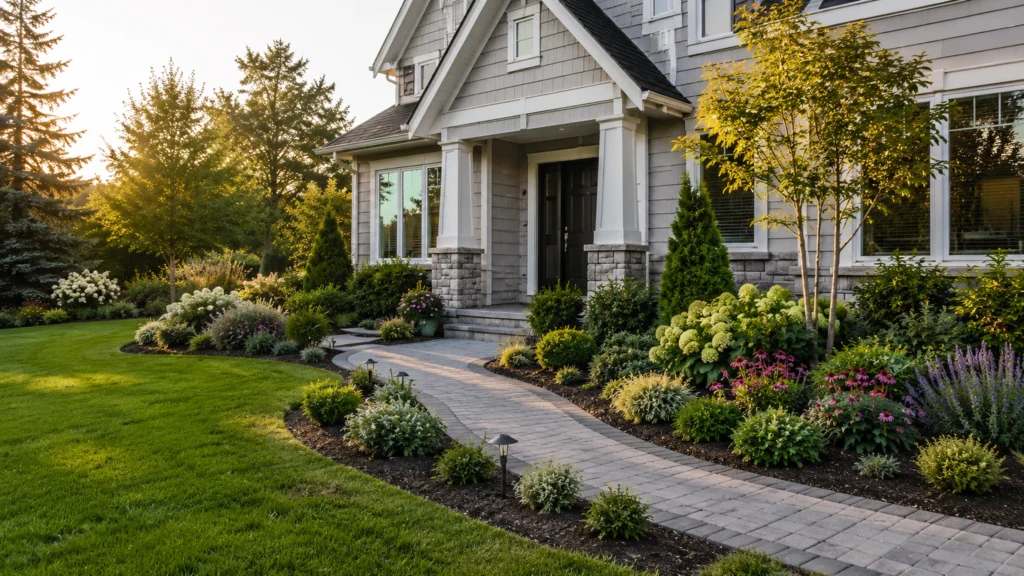
Use Fewer Plant Varieties
Repeating a limited plant palette simplifies watering, pruning, and seasonal cleanup. It also creates a more unified design.
Select Plants That Fit the Space
A shrub that naturally stays compact is easier to maintain than a large shrub that must be trimmed several times each year.
Reduce Difficult Lawn Areas
Grass is often hardest to maintain on steep slopes, narrow side strips, deeply shaded areas, and spaces interrupted by tree roots.
Replace struggling lawn with:
- Groundcovers
- Mulched beds
- Gravel
- Perennial planting
- Low-growing shrubs
- A small sitting area
Install Efficient Watering
Drip irrigation and soaker hoses deliver water closer to plant roots than overhead sprinklers. Group plants with similar water requirements so each area can be watered appropriately.
Use Mulch and Dense Planting
Mulch suppresses many young weeds. As plants mature and cover more soil, they reduce the open spaces where weeds can establish.
Avoid Unnecessary Formal Hedges
A clipped hedge can look elegant, but it requires frequent trimming. For an easier design, use shrubs with naturally attractive forms and allow them to grow with minimal shaping.
Cheap Simple Front Yard Landscaping Ideas
A limited budget does not have to produce a temporary-looking yard. Concentrate on improvements that create clear lines, healthy plants, and a strong entrance.
Redefine Existing Beds
Expanding or reshaping an awkward foundation bed can transform the front of the house without requiring major construction.
Divide Established Perennials
Many mature perennials can be divided and replanted elsewhere. This creates repeated plant groups without purchasing every plant new.
Refresh the Mulch
A clean layer of mulch improves contrast, defines the beds, and makes the entire yard appear better maintained.
Add Simple Edging
A crisp edge between lawn and planting beds is one of the most affordable curb appeal improvements.
Create a Mailbox Garden
A small planting bed around the mailbox adds color near the street and connects the house to the wider property.
Repeat Affordable Plants
Three or five plants of the same variety often create more impact than several unrelated plants purchased individually.
Improve the Entrance
Clean the path, trim overgrown shrubs, add coordinated containers, and make sure the front door is visible. These simple changes can deliver stronger results than filling distant corners with flowers.
Use Gravel in Suitable Areas
Gravel may be useful for narrow strips, dry areas, informal paths, or spaces where grass struggles. Install appropriate edging and prepare the base carefully to keep the surface stable.
Upgrade One Zone at a Time
Start with the area people notice first, usually the walkway, porch, or foundation bed. Completing one zone properly looks better than spreading materials thinly across the whole yard.
Small Front Yard Landscaping Ideas
A small space benefits from restraint. Too many features can make the yard feel even smaller.
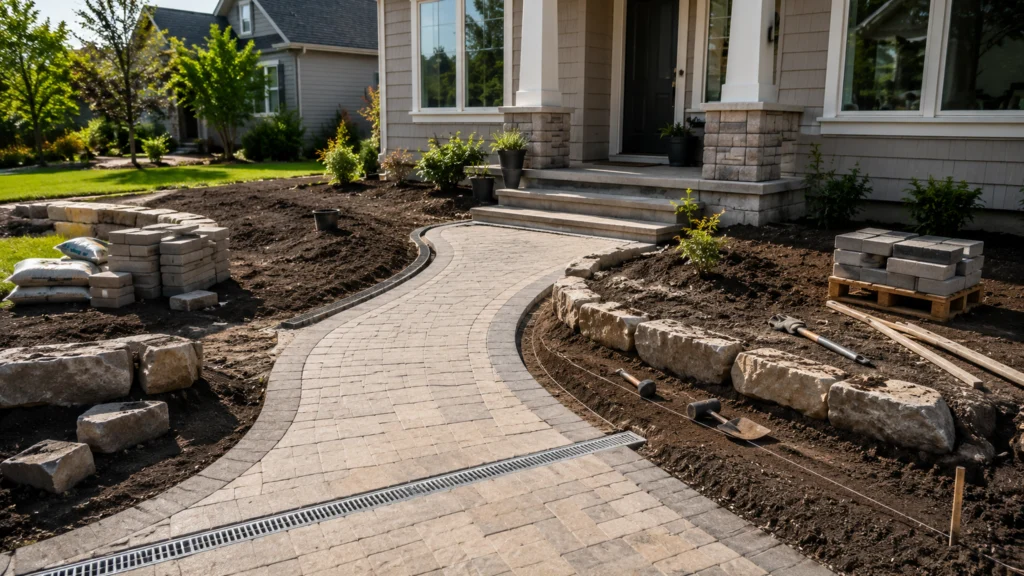
Choose One Main Focal Point
Use the entrance, a compact ornamental tree, or a large planter as the visual anchor. Avoid several competing statement pieces.
Keep the Plant Palette Simple
Use a limited combination of shrubs, perennials, and groundcovers. Repetition creates continuity and reduces visual clutter.
Add Vertical Interest
A narrow upright tree, trellis, columnar evergreen, or tall container can draw the eye upward without occupying much ground space.
Use Layered Planting Carefully
Place the tallest plants at the back, medium plants in the middle, and low plants at the front. Keep each layer proportional to the depth of the bed.
Preserve Open Space
You do not need to plant every part of a small yard. A modest open lawn, gravel area, or visible ground plane gives the eye room to rest.
Use Curves With Restraint
A gentle curve can make a small yard feel less rigid, but too many waves create clutter. One simple bed line is usually more effective.
These principles work particularly well for small front yard landscaping designs, townhouse gardens, and narrow urban properties.
Landscaping Ideas for Challenging Front Yards
Front Yards With Full Sun
For hot, sunny spaces, choose plants that tolerate direct light and local summer conditions.
Consider:
- Drought-tolerant shrubs
- Ornamental grasses
- Sun-loving perennials
- Heat-tolerant groundcovers
- Climate-appropriate small trees
Use mulch to reduce moisture loss, but remember that newly planted drought-tolerant plants still need regular watering while establishing roots.
Shaded Front Yards
In shade, focus on foliage, texture, and form rather than relying only on flowers.
Possible plant groups include shade-tolerant shrubs, ferns, woodland perennials, groundcovers, and plants with contrasting leaf shapes.
Do not continue reseeding grass in deep shade if it repeatedly fails. A planted bed may be a healthier and more attractive solution.
Front Yards Without Grass
A front yard can look lush without a traditional lawn.
Alternatives include:
- Groundcover planting
- Mulched garden beds
- Gravel gardens
- Native plant gardens
- A small front patio
- Stepping-stone paths
- Mixed shrubs and perennials
Maintain some open visual space so a lawn-free front yard does not feel crowded.
Front Yards With a Porch
Use plants to frame the porch and soften its edges. Keep the steps visible and avoid placing thorny, messy, or oversized plants near the main entrance.
Front Yards With Hills
Use the slope as a design feature rather than fighting it. Layer shrubs and groundcovers along the contour, stabilize the soil, and create safe steps where access is necessary.
Common DIY Front Yard Landscaping Mistakes
Buying Plants Before Creating a Plan
Impulse purchases often produce mismatched plants, inconsistent spacing, and unsuitable growing conditions.
Ignoring Mature Plant Size
Small nursery plants can become large shrubs or trees. Overplanting leads to crowded beds, blocked windows, and constant pruning.
Planting Too Close to the House
Leave enough room for air circulation, maintenance access, and mature growth. Plants pressed against walls may trap moisture and hide damage.
Using Too Many Different Materials
Several types of stone, edging, mulch, paving, and decorative objects can make a front yard feel fragmented. Repeat a small selection of materials.
Making Beds Too Narrow
Thin foundation beds do not provide enough depth for layered planting. Wider beds generally create a softer and more natural transition from house to lawn.
Ignoring Drainage
Standing water, erosion, and runoff should be addressed before planting. Decorative improvements will not compensate for poor water management.
Choosing Plants Only for Flowers
Flowers are temporary. Consider foliage, branching structure, bark, berries, seed heads, and winter form.
Overusing Small Decorative Objects
Too many ornaments, signs, pots, and individual accents can weaken the main design. Choose a few meaningful features and give them room to stand out.
Forgetting the View From Inside
A front yard is not viewed only from the street. Consider what you will see through the windows and from the porch.
A Simple Front Yard Maintenance Plan
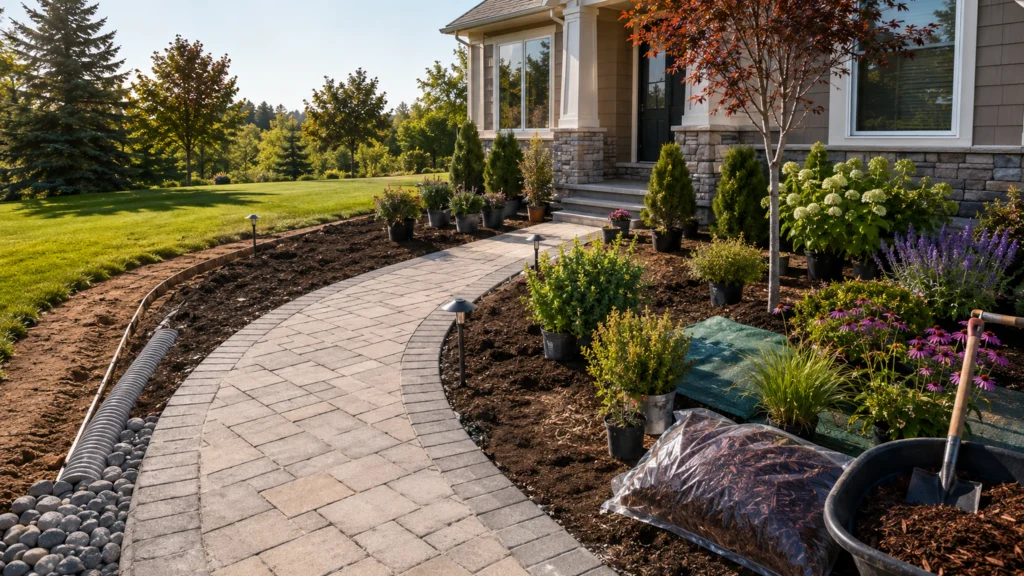
Even a low-maintenance design benefits from a regular routine.
Spring Tasks
- Remove winter debris.
- Cut back damaged or dead growth.
- Check edging and paths.
- Add compost where needed.
- Replenish mulch.
- Inspect irrigation.
- Plant new trees, shrubs, or perennials when conditions are suitable.
Summer Tasks
- Water deeply when needed.
- Remove weeds before they seed.
- Deadhead selected flowers.
- Monitor plants for stress.
- Keep paths and entrances clear.
- Adjust irrigation during hot weather.
Autumn Tasks
- Plant suitable trees and shrubs.
- Divide overcrowded perennials.
- Remove diseased plant material.
- Collect excessive leaf buildup.
- Check drainage before winter.
- Add seasonal containers when desired.
Winter Tasks
- Review the structure of the landscape.
- Identify empty areas and overcrowded plants.
- Protect vulnerable plants when necessary.
- Plan next season’s improvements.
- Avoid piling snow or deicing material onto sensitive beds.
Conclusion
DIY front yard landscaping is most successful when it begins with observation rather than shopping. Study the site, define your goals, draw a simple plan, correct practical problems, and establish the hardscape before choosing the finishing plants.
Use trees and shrubs to create structure. Repeat perennials and ornamental grasses for rhythm. Keep the front door visible, use a clear path, and choose plants that suit the sunlight, soil, climate, and available space.
Whether you are searching for inexpensive landscaping ideas, small front yard landscaping ideas, or a low-maintenance front yard design, the same principle applies. A restrained, well-planned landscape will usually look better than an overcrowded one.
Front Yard Landscaping Ideas encourages homeowners to build their yards gradually. Complete one area properly, observe how it performs, and let the landscape evolve. The result will feel more personal, remain easier to maintain, and create the kind of curb appeal that looks natural rather than forced.
Frequently Asked Questions
How Do You DIY Landscape a Front Yard?
Measure the property, study the sunlight and drainage, and draw a simple plan showing paths, beds, trees, and major features. Set a budget, install hardscape elements first, prepare the soil, plant from largest to smallest, apply mulch, and establish an appropriate watering routine.
What Is the Cheapest Way to Landscape a Front Yard?
The cheapest approach is to improve what already exists. Remove weeds, redefine bed edges, divide established perennials, prune overgrown shrubs, refresh the mulch, and focus on the entrance. Complete one section at a time instead of renovating the entire yard at once.
How Do I Make a Front Yard Landscape Plan?
Draw the house and property boundaries to scale. Add the driveway, paths, utilities, windows, doors, existing trees, and drainage areas. Mark sunny and shaded zones, choose a focal point, draw planting beds, and assign general plant types before selecting individual varieties.
What Should I Plant in Front of My House?
Choose plants suited to your local climate, soil, and sunlight. Use compact trees, evergreen or flowering shrubs, perennials, ornamental grasses, and groundcovers. Keep mature plant sizes below windows and away from doors, vents, paths, and the foundation.
How Can I Make My Front Yard Low Maintenance?
Use a limited plant palette, choose plants that fit their mature space, reduce lawn in difficult areas, install efficient irrigation, apply mulch, and group plants with similar water requirements. Avoid fast-growing shrubs that require constant pruning.
How Can I Landscape a Small Front Yard?
Choose one focal point, use compact plant varieties, repeat a small number of plants, add vertical interest, and preserve some open space. Avoid oversized trees, deep hedges, excessive ornaments, and too many unrelated materials.
Should I Install Hardscape or Plants First?
Install major hardscape elements first. Complete drainage work, retaining walls, paths, steps, patios, and permanent edging before planting. This prevents construction activity from damaging new plants.
Can I Landscape My Front Yard Without Grass?
Yes. Grass can be replaced with groundcovers, native plants, shrubs, perennial beds, gravel, mulch, stepping stones, or a small patio. Keep the design organized and leave some open visual space.
How Do I Improve Front Yard Curb Appeal on a Budget?
Make the entrance easy to see, clean the walkway, trim overgrown plants, define the beds, add fresh mulch, repeat a few affordable plants, and use coordinated porch containers. Strong edges and healthy plants often create more impact than expensive decorations.
What Is the Best Time to Start a DIY Landscaping Project?
The best time depends on the local climate and the type of work. Hardscape and planning can often be completed whenever the ground is workable. Trees, shrubs, and perennials are generally easier to establish during moderate weather rather than extreme heat or freezing conditions.

Sara Bendrick believes your yard should be a place you actually look forward to coming home to. A licensed and bonded design-build contractor (C-27 #1006161), she founded Sarita Landscape Designs and has spent over twelve years designing residential outdoor spaces across Southern California with a real soft spot for curb appeal and low-water, no-lawn designs.
When she’s not on a job site, Sara’s on camera or on stage. She’s hosted yard-renovation shows including I Hate My Yard, Build It Like Bendrick, and Lawn & Order, written Big Impact Landscapes, given two TEDx talks, and serves as a spokesperson for Stihl. Her mission is simple, help people see the potential in the yard they already have.