
To plant front yard landscaping, begin by studying the sunlight, soil, drainage, available space, and architectural style of your home. Create a simple landscape plan, choose plants suited to the site, prepare the soil, position the largest plants first, and then add shrubs, flowers, ground covers, mulch, and edging. Finish by watering deeply and following a consistent maintenance schedule while the new landscape becomes established.
The difference between a front yard that merely contains plants and one that feels polished, welcoming, and intentional lies in how carefully those steps are handled.
A successful front yard landscape design should lead the eye toward the entrance, complement the house, provide year-round interest, and remain manageable after the excitement of planting day has passed. This guide explains how to landscape your front yard from the ground up, whether you are refreshing a few foundation beds or turning an open front lawn into a full garden.
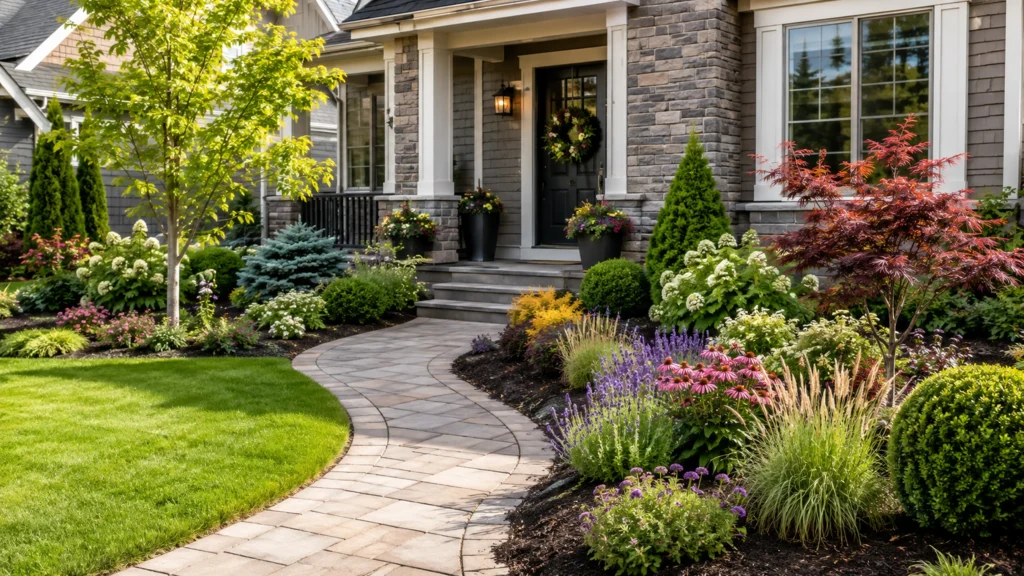
Table of Contents
Start With a Clear Front Yard Landscape Plan
It is tempting to visit a garden center, fill a cart with beautiful plants, and decide where everything belongs after arriving home. That approach often creates an expensive collection of plants rather than a cohesive landscape.
Before buying anything, make a front yard landscape plan.
Walk across the property and look at it from several positions:
- From the street
- From the driveway
- From the front walkway
- From inside the main rooms of the house
- From neighboring properties
- From the front porch or entrance
Notice where your eyes naturally travel. The front door should usually remain the visual destination. Plants, pathways, lighting, and open spaces can all help guide attention toward it.
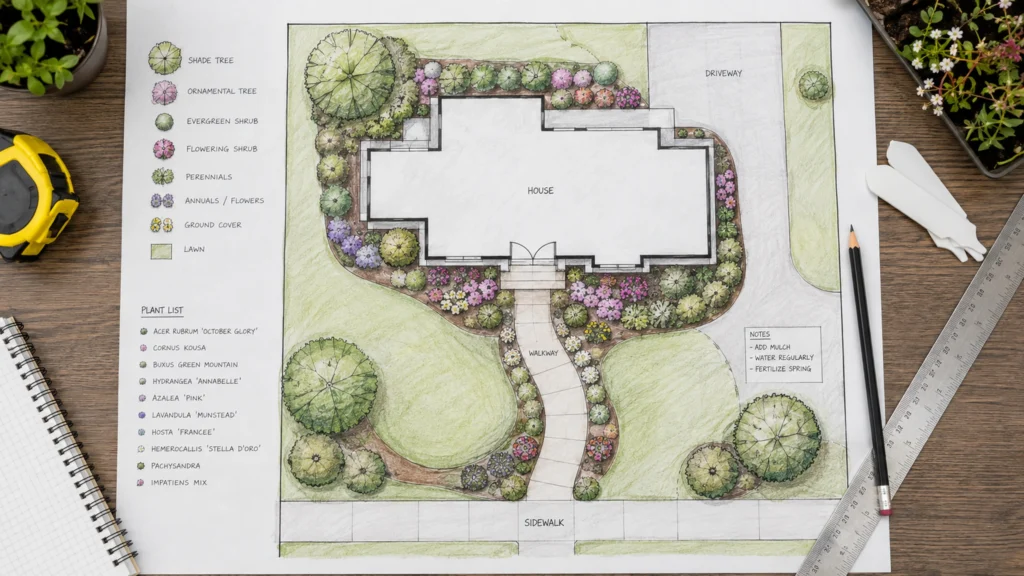
Your plan does not need to be an architectural drawing. A basic sketch showing the house, driveway, walkway, lawn, existing trees, utility areas, and proposed planting beds is enough to begin.
Record approximate measurements so you understand how much space is actually available. This prevents a common mistake: choosing plants that fit the garden center container but eventually overwhelm the front of the house.
Assess Sunlight, Soil, Drainage, and Climate
The best plants for a front yard are not simply the most attractive plants. They are the plants that match the conditions of that particular yard.
A plant growing in the wrong location may survive for a while, but it is unlikely to look healthy without constant attention. A plant matched to the site usually grows more evenly, resists stress, and needs less intervention.
Measure the Sunlight
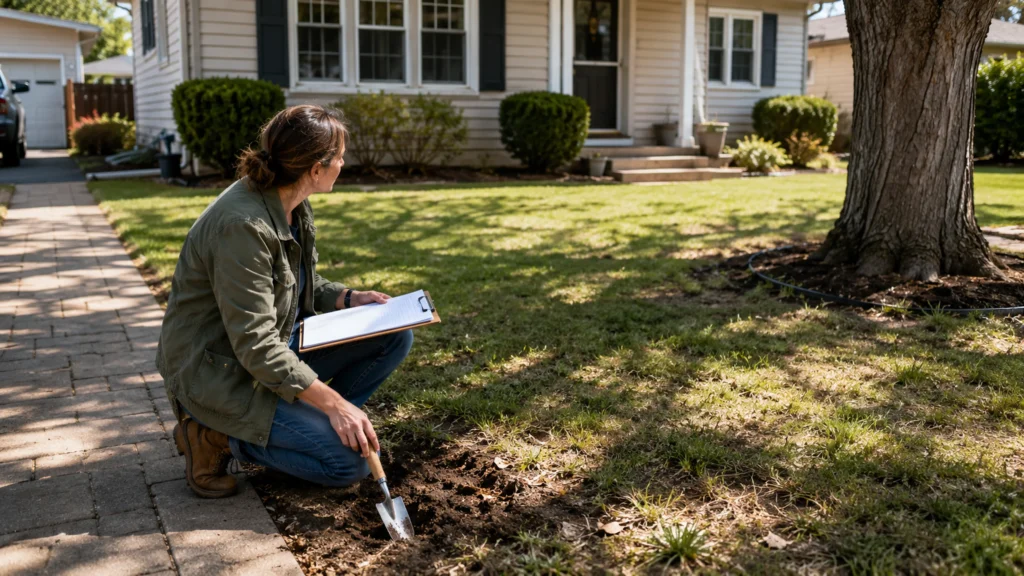
Observe the yard at several times during the day. Do not judge the light from a single morning or afternoon visit.
Classify each planting area as:
- Full sun, receiving approximately six or more hours of direct sunlight
- Part sun or part shade, receiving a mixture of direct light and shade
- Full shade, receiving little direct sunlight
- Dappled shade, receiving filtered light through tree branches
Remember that sunlight changes throughout the year. A bed that receives winter sun may become shaded when nearby trees produce leaves.
The walls of the house also create small microclimates. A south-facing wall can reflect heat, while a north-facing foundation bed may remain cooler and damp for longer periods.
Understand the Soil
Healthy front yard plants begin below ground. Before planting, examine the soil texture and condition.
Sandy soil drains quickly but may struggle to hold moisture and nutrients. Heavy clay can retain nutrients well but may drain slowly and compact around roots. Loamy soil generally provides a more balanced mixture of drainage, moisture retention, and air circulation.
A soil test can help identify:
- Soil pH
- Organic matter
- Nutrient deficiencies
- Excess salts
- Recommended amendments
Avoid adding large amounts of fertilizer without understanding what the soil needs. More fertilizer does not automatically produce healthier plants and can sometimes encourage weak growth or damage roots.
Check the Drainage
After rainfall, look for water that remains in the planting area. Persistent puddles may indicate compacted soil, poor grading, heavy clay, or a low point in the yard.
Choose moisture-tolerant plants for naturally damp areas, or improve the drainage before installing plants that require drier conditions.
Do not create planting beds that direct water toward the foundation. The finished grade should encourage water to move safely away from the house.
Consider Your Local Climate
Your regional climate influences which trees, shrubs, perennials, ornamental grasses, and ground covers can survive the year.
Consider:
- Winter temperatures
- Summer heat
- Annual rainfall
- Drought periods
- Humidity
- Wind exposure
- Salt exposure near coastal areas or winter roads
- Local pests and plant diseases
A plant may look perfect in an online photograph and still be unsuitable for your climate. Local nurseries and regional plant guides are often more useful than generic lists of popular landscape plants.
Decide What the Front Yard Needs to Accomplish
Every front yard has practical responsibilities. Before selecting plants, decide what you need the landscape to do.
Your goals may include:
- Improving curb appeal
- Framing the entrance
- Creating privacy
- Softening a large wall
- Reducing the amount of lawn
- Adding seasonal flowers
- Supporting pollinators
- Hiding utility equipment
- Improving drainage
- Creating a front yard garden
- Making the property easier to maintain
- Adding shade near the house or walkway
Prioritize the most important goals. Trying to solve every problem in one small planting bed can make the design feel crowded.
A family that wants an easy-care entrance will need a different plan from someone creating a richly planted front yard flower garden. Neither approach is better. The right one is the design that suits the property and the people maintaining it.
Choose a Front Yard Landscape Style
A clear style makes plant selection easier because it gives every choice a shared direction.
Formal Front Yard Landscaping
Formal landscapes use balance, repetition, defined edges, clipped shrubs, and symmetrical arrangements. They work particularly well with traditional homes and prominent central walkways.
Formal does not have to mean stiff. Repeated evergreen forms can create structure while flowering perennials bring movement and color.
Naturalistic Front Yard Garden
A naturalistic garden uses layered plants, curved beds, ornamental grasses, native species, and looser forms. It can soften modern architecture and create habitat for birds and pollinators.
The design should still feel intentional. Repeated plants and clearly defined bed edges keep a naturalistic planting from appearing neglected.
Cottage-Style Front Yard Flower Garden
A cottage garden combines flowers, herbs, shrubs, climbing plants, and informal paths. It is colorful and personal, but it usually requires more regular maintenance than a simple evergreen landscape.
Limit the color palette or repeat several key plants to keep the display visually connected.
Modern Front Yard Landscape Design
Modern landscaping relies on clean lines, strong plant shapes, open space, restrained color, and repeated materials. Large groups of a few plant varieties often look stronger than many isolated species.
Ornamental grasses, sculptural evergreens, ground covers, and simple paving materials can work well in this style.
Low-Maintenance Front Yard Landscaping
Low-maintenance landscaping focuses on durable plants, efficient irrigation, simple bed shapes, adequate spacing, and fewer high-maintenance features.
Low maintenance does not mean no maintenance. Every planted landscape requires some watering, weeding, pruning, mulching, and seasonal cleanup. The goal is to reduce unnecessary work through better design.
Build the Landscape Around a Strong Structure
Good front yard landscaping has a visual framework. Flowers can change with the seasons, but the underlying structure should continue to hold the design together.
Build that structure with:
- Existing architecture
- Walkways and driveways
- Trees
- Evergreen shrubs
- Large deciduous shrubs
- Hedges
- Walls or fences
- Defined planting beds
- Repeated plant forms
Think of these elements as the bones of the landscape. Once they are in place, smaller plants can provide detail, color, and movement.
Preserve Important Views
Avoid planting tall shrubs where they will cover windows, house numbers, lighting, or the front door. Keep sightlines open near the driveway and sidewalk.
The entrance should feel visible and welcoming rather than hidden behind a wall of vegetation.
Create Balance Without Copying Both Sides
Symmetry can work well, especially around a centered entrance, but it is not mandatory. An asymmetrical design can feel balanced when the visual weight is distributed carefully.
For example, a small ornamental tree on one side of the house might be balanced by a broader grouping of shrubs on the other.
Balance is about visual stability, not perfect duplication.
Design Planting Beds That Fit the House
Thin strips of soil pressed against the foundation rarely create enough depth for effective layering. Wider beds allow plants to develop naturally and make the house feel connected to the yard.
Use a garden hose or marking paint to test possible bed lines before digging. View the outline from the street and from inside the house.
Gentle curves can soften the property, but avoid creating many small waves. Complicated edges take longer to maintain and can make the landscape feel restless.
Straight or angular beds may suit modern homes. Broad curves often complement traditional, cottage, and naturalistic landscapes.
When planning front flower bed landscaping, consider the mature width of every plant. A shrub that appears small at planting time may eventually occupy several feet of space.
Select the Right Front Yard Plants
A strong plant palette includes different sizes, forms, textures, and seasons of interest. It should also remain simple enough to feel unified.
Instead of choosing a different plant for every empty space, repeat successful plants in several areas. Repetition helps the eye move across the landscape and makes even a modest garden look professionally planned.
Trees for Height and Shade
Trees create the largest visual impact and should usually be selected first.
Depending on the size of the property, you might use:
- A shade tree near the lawn
- A small flowering tree near the entrance
- A narrow tree for a tight side area
- An evergreen tree for screening
- A multi-stem tree as a focal point
Before planting a tree, consider its mature height and canopy spread. Keep it away from overhead wires, underground utilities, foundations, gutters, and paved areas that may be damaged by roots or falling debris.
A small front yard does not necessarily require a tiny tree, but the species and placement must suit the available space.
Evergreen Foundation Plants
Evergreens provide year-round structure and prevent the front yard from appearing empty in winter. They are particularly useful near entrances, corners, and large foundation walls.
Good foundation planting usually combines several forms rather than creating a continuous row of identical shrubs.
Possible roles include:
- Upright plants to frame the entrance
- Rounded shrubs below windows
- Low spreading evergreens along bed edges
- Narrow plants near corners or columns
Do not place shrubs directly against the house. Leave room for mature growth, airflow, window access, painting, and maintenance.
Deciduous Shrubs for Flowers and Seasonal Interest
Deciduous shrubs can provide spring flowers, summer foliage, autumn color, fruit, or winter stems.
Choose shrubs according to the space rather than relying on repeated pruning to control naturally large plants. A shrub planted where it can reach its mature form will usually look better and require less work.
Perennials for Repeat Color
Perennials return for multiple growing seasons and can create a dependable layer of flowers and foliage.
Select perennials with different bloom periods so the garden does not peak for two weeks and then fade. Combine spring, summer, and autumn performers while also considering foliage texture.
Planting several of the same perennial together usually creates a stronger effect than scattering individual plants throughout the yard.
Annual Flowers for Flexible Color
Annual flowers are useful near entrances, containers, mailbox gardens, and the front edges of beds. They provide a long season of color and can be changed as your taste evolves.
Use annuals as accents rather than relying on them to create the entire landscape structure.
Ornamental Grasses for Movement
Ornamental grasses bring fine texture and movement to a landscape of broad-leaved shrubs. Many also provide attractive seed heads and winter interest.
Select noninvasive varieties suited to your region, and confirm the mature height before planting them near windows or walkways.
Ground Covers for the Lowest Layer
Ground covers help connect larger plants and cover exposed soil. They can also be useful on slopes or in areas where turf grass performs poorly.
Choose ground covers that are appropriate for the local climate and manageable within the space. Some vigorous species can spread beyond their intended boundaries.
Layer Plants by Mature Height
One of the most reliable landscaping plant ideas is to arrange plants in layers.
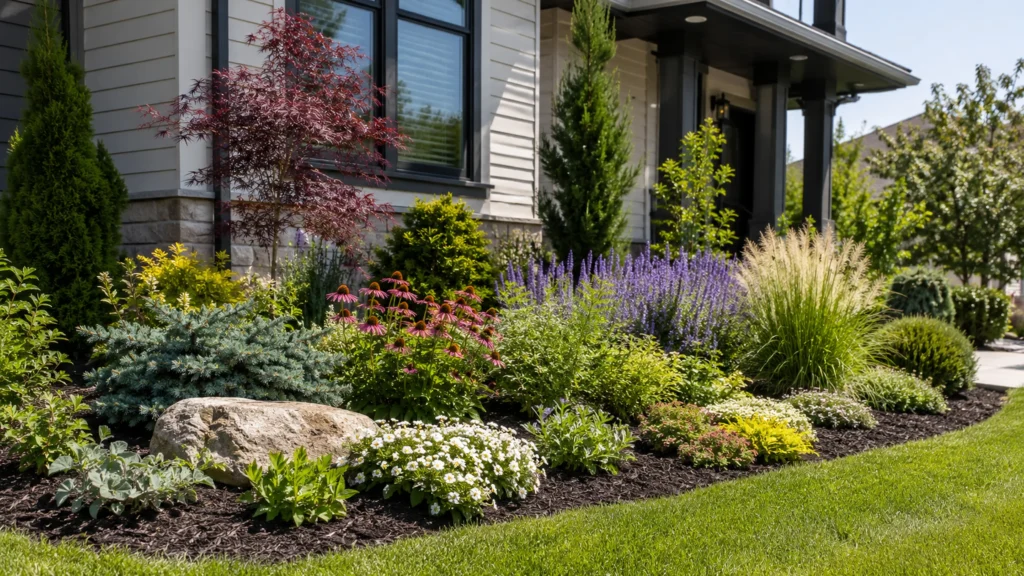
A typical bed may include:
- Trees or tall structural plants at the back or as focal points
- Medium shrubs forming the main body of the planting
- Small shrubs, perennials, and ornamental grasses in front
- Ground covers or low flowers along the edge
This arrangement creates depth, but it should not become a rigid staircase. Allow selected plants to overlap visually and repeat across the bed.
In island beds viewed from several directions, place taller plants near the center and lower plants around the perimeter.
Always design with mature sizes. Crowding plants for an instant full appearance can lead to poor airflow, tangled branches, blocked windows, and expensive removal later.
Use Color Without Making the Yard Feel Chaotic
Front yard landscaping with color is most effective when the palette relates to the house.
Look at the color of the siding, brick, stone, trim, front door, and roof. Select flowers and foliage that complement those permanent materials.
A restrained palette often creates more impact than every available flower color.
Consider using:
- Two or three main flower colors
- A repeated foliage color
- White flowers to brighten shaded areas
- Deep foliage for contrast
- Silver or blue-green foliage to cool a warm color scheme
Color is not limited to flowers. Leaves, bark, berries, stems, seed heads, and evergreen needles can provide interest throughout the year.
Repeat the main colors in several parts of the yard. That repetition makes separate garden beds feel like one landscape.
Include Year-Round Interest
Many front yard plantings are designed almost entirely around spring and summer flowers. Once those flowers disappear, the landscape can look unfinished.
Create year-round interest by including plants with different seasonal strengths.
Spring
Use flowering trees, bulbs, early perennials, and spring-blooming shrubs.
Summer
Rely on long-blooming perennials, annuals, ornamental grasses, and strong foliage.
Autumn
Include trees and shrubs with colorful leaves, berries, seed heads, or late flowers.
Winter
Use evergreens, structured branches, ornamental bark, persistent fruit, and dried grass plumes.
Year-round plants for the front yard do not all need to be evergreen. A deciduous shrub with attractive winter stems may contribute more than an evergreen with little shape or contrast.
Plan Paths and Access Before Planting
Plants should support movement rather than compete with it.
The main walkway should lead visitors clearly toward the front door. Avoid narrowing it with shrubs that lean into the path after rain or perennials that collapse across the paving.
Consider how people will move between:
- The sidewalk and front door
- The driveway and entrance
- The mailbox and house
- Outdoor faucets and utility areas
- Side gates and storage areas
- Garden beds that need maintenance
Stepping stones or narrow maintenance paths can provide access to wide planting beds without compacting the soil around roots.
Keep thorny, spiky, or strongly spreading plants away from paths, steps, and doors.
Prepare the Planting Area
Once the plan and plant list are complete, prepare the site before placing plants.
Remove Unwanted Turf and Weeds
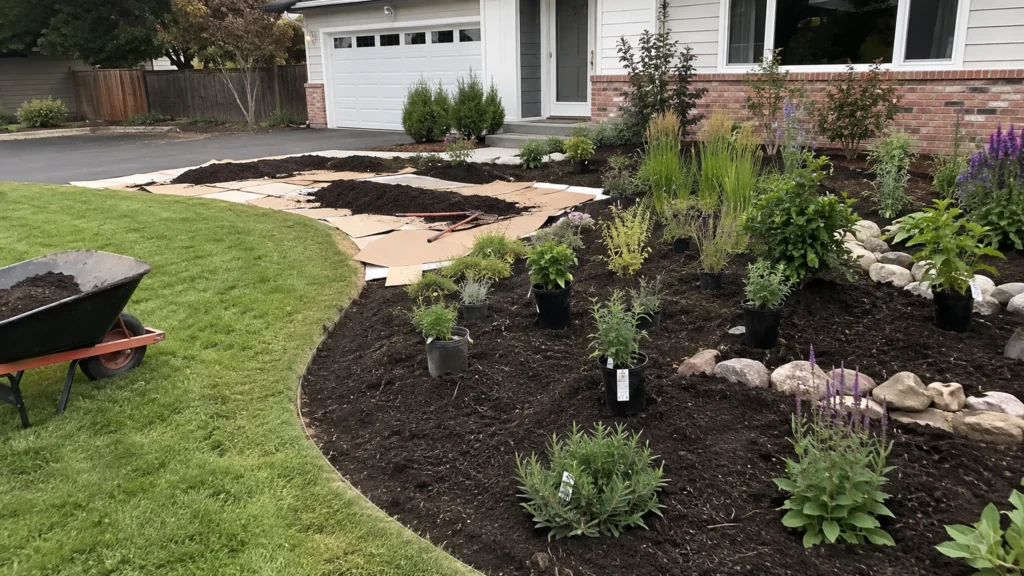
For a new front yard garden, remove grass and perennial weeds thoroughly. Small roots left in the soil can quickly grow through fresh mulch.
Possible lawn-removal methods include:
- Cutting and lifting the sod
- Sheet mulching with overlapping cardboard and organic material
- Using a sod cutter for a large area
- Gradually expanding existing beds
Choose the method according to the season, project size, and how quickly you need to plant.
When converting lawn to garden, confirm that removing turf will not create drainage problems or expose soil to erosion.
Loosen Compacted Soil
Construction activity, foot traffic, and lawn equipment can compress the soil around a house. Compacted soil reduces the movement of air and water around roots.
Loosen the planting area carefully, especially where new beds have been created. Avoid aggressively cultivating beneath established trees, where digging can damage important roots.
Add Appropriate Organic Matter
Compost can improve many soils, but it should be incorporated appropriately rather than creating a sharply different pocket of rich soil around each individual plant.
The goal is to improve the planting area while allowing roots to move into the surrounding ground.
Do not fill every planting hole with large quantities of rich material. Roots may remain concentrated in the amended hole instead of spreading outward.
Establish the Final Grade
Smooth the planting area and make sure the grade moves water away from the house. Allow enough space for mulch without piling soil against siding, masonry weep holes, or wooden structures.
Arrange Every Plant Before Digging
Set all container plants on top of the prepared soil before opening the first planting hole.
Begin with the largest elements:
- Position trees and focal plants.
- Add major evergreen and deciduous shrubs.
- Arrange medium perennials and grasses.
- Place ground covers and front-edge plants.
- Step back and view the arrangement from the street.
Move plants until the spacing and rhythm feel right. This is much easier while they are still in their containers.
Check plant labels for mature width and recommended spacing. Measure rather than guessing, especially around windows, walkways, and property boundaries.
How to Plant Front Yard Trees, Shrubs, and Flowers
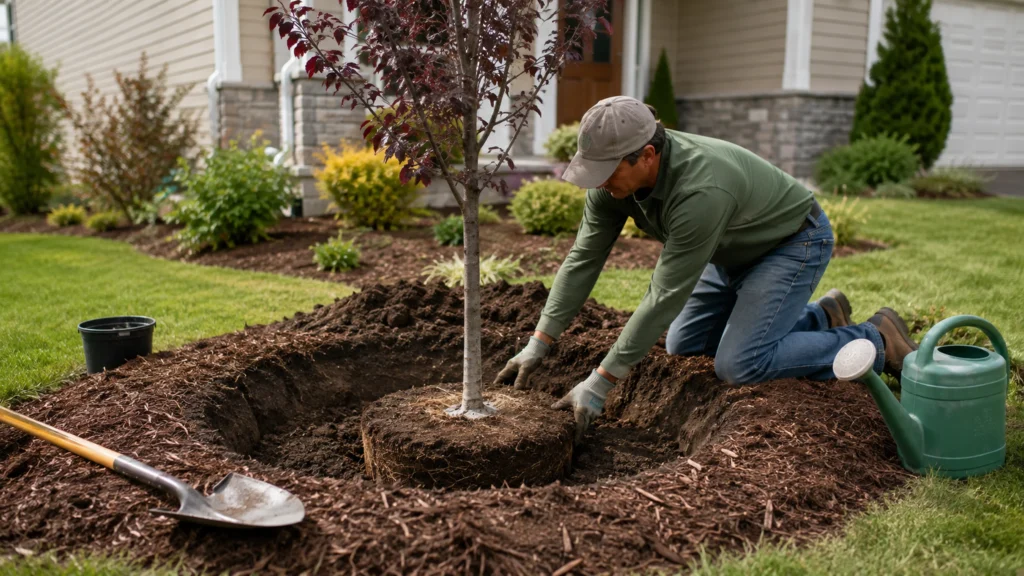
Correct planting depth is one of the most important parts of the project. A healthy plant can decline when installed too deeply.
Step 1. Water the Plants Before Planting
Water container plants before removing them from their pots. A slightly moist root ball is easier to handle and less likely to fall apart.
Step 2. Dig a Wide Planting Hole
Dig the hole wider than the root ball so surrounding soil is loosened and new roots can expand outward.
The hole should generally be no deeper than necessary for the plant to sit at the correct level.
Step 3. Remove the Container Carefully
Slide the plant from its container without pulling roughly on the stems. Inspect the roots.
If roots are circling tightly around the root ball, loosen or redirect them before planting. Severely circling roots can continue growing inward and restrict the plant later.
Step 4. Position the Plant at the Correct Depth
Set the plant so the top of the root ball is level with or slightly above the surrounding soil, depending on soil and drainage conditions.
For trees, locate the root flare where the trunk begins to widen into the main roots. The root flare should remain visible rather than being buried under soil or mulch.
Step 5. Backfill With Soil
Return the excavated soil around the root ball in stages. Firm it gently with your hands to remove large air pockets, but do not pack it tightly.
Avoid stepping heavily around the newly planted root zone.
Step 6. Water Thoroughly
Water slowly and deeply after planting. This settles the soil around the roots and provides immediate moisture.
Add soil only where settling has created a low area. Do not bury the root crown.
Step 7. Apply Mulch
Spread mulch across the planting bed to help moderate soil temperature, conserve moisture, and suppress weeds.
Keep mulch away from tree trunks, shrub stems, and plant crowns. Mulch piled against bark can trap moisture and create conditions for decay or pests.
A broad, even layer is more effective than a deep mound.
Install Edging With Restraint
Edging separates planting beds from lawns, gravel, or walkways. It can create a clean finish and make mowing easier.
Common edging materials include:
- Cut soil edges
- Metal edging
- Brick
- Stone
- Concrete
- Wood
- Recycled composite materials
Choose a material that relates to the house and existing hardscape. Too many unrelated materials can make a small front yard feel cluttered.
Edging should support the design rather than become the main attraction.
Water New Front Yard Plantings Correctly
New plants need consistent moisture while roots establish in the surrounding soil. Frequent shallow sprinkling is usually less useful than slower, deeper watering.
The exact schedule depends on:
- Plant type
- Soil texture
- Temperature
- Rainfall
- Wind
- Sun exposure
- Drainage
- Time since planting
Check the soil rather than watering according to habit. The surface may appear dry while the root zone remains moist, or the surface may appear wet while deeper soil is dry.
Water at the base of plants where possible. Wet foliage is not always harmful, but watering the root zone is more efficient.
Drip irrigation or soaker hoses can work well in planted beds when they are checked regularly and adjusted as plants grow.
Even drought-tolerant plants usually require consistent watering during establishment. Their lower water needs become more relevant after their root systems have developed.
Maintain the Landscape During the First Year
The first growing season has a major influence on the long-term success of a new landscape.
Weed Regularly
Remove weeds while they are small. Young weeds are easier to pull and less likely to compete with new plants for moisture and nutrients.
Monitor Moisture
Check the soil several times each week during hot or dry periods. Plants near walls, pavement, roof overhangs, or large tree roots may dry at different rates.
Replace Failed Plants Thoughtfully
A failed plant does not always mean you selected a poor species. Investigate the cause before installing the same plant again.
Possible causes include:
- Incorrect planting depth
- Too much or too little water
- Poor drainage
- Insufficient sunlight
- Root damage
- Heat reflected from walls or pavement
- Animal damage
- Disease
- An unsuitable climate
Prune Only When Necessary
Avoid shearing every shrub into the same rounded shape. Prune to remove damaged growth, guide the natural form, or prevent a genuine conflict.
Newly planted trees and shrubs generally need time to establish before receiving major corrective pruning.
Refresh Mulch Carefully
Top up mulch only when the existing layer has become thin. Adding a thick new layer every year can gradually bury stems and roots.
How to Turn a Front Lawn Into a Garden
You do not have to remove the entire lawn at once. A phased approach is often easier and produces a more thoughtful design.
Begin by expanding beds around existing trees or along the front walkway. Add one island bed or convert an awkward section of grass that is difficult to mow.
To turn lawn into a garden:
- Mark the new bed shape.
- Observe how it affects movement and drainage.
- Remove or suppress the turf.
- Prepare the soil.
- Install structural plants first.
- Add perennials, flowers, and ground covers.
- Mulch exposed soil.
- Maintain a defined edge.
A front lawn garden should still include visual breathing room. Plants do not need to occupy every inch of the property. Paths, low ground covers, gravel areas, and small sections of lawn can provide useful contrast.
Common Front Yard Landscaping Mistakes
Buying Plants Before Making a Plan
Impulse purchases often create mismatched colors, unsuitable growing conditions, and awkward spacing.
Planting Too Close to the House
Plants need room for roots, branches, airflow, and maintenance access. Crowded foundation plantings can block windows and hold moisture near exterior surfaces.
Ignoring Mature Plant Size
A shrub labeled as compact can still become several feet wide. Read the expected mature dimensions rather than judging the plant by its nursery pot.
Using Too Many Different Plants
Variety can be exciting, but excessive variety creates visual noise. Repeat plants in groups to make the design feel connected.
Choosing Flowers Without Structure
Flowers provide seasonal appeal, but trees, shrubs, grasses, paths, and bed lines give the landscape its lasting form.
Making Beds Too Narrow
Narrow beds leave little room for layering and often force plants against the house or into the lawn.
Burying Trees and Shrubs Too Deeply
Deep planting can limit oxygen around the roots and encourage long-term decline.
Piling Mulch Against Stems
Mulch should cover the soil, not the trunks or crowns of plants.
Overwatering Every Plant Equally
Different plants and different sections of the yard may have different moisture requirements.
Forgetting Winter
A design based entirely on summer flowers may look bare for several months. Include evergreen structure, bark, branches, seed heads, and persistent foliage.
A Simple Front Yard Planting Formula
For homeowners who feel overwhelmed by plant choices, use this basic formula as a starting point:
- One focal tree or specimen plant
- Two or three types of structural shrubs
- One repeated evergreen
- Two or three flowering perennials
- One ornamental grass
- One ground cover
- Seasonal flowers near the entrance
Adjust the formula according to the size of the yard and the climate.
This approach creates enough variety to remain interesting while limiting the number of plants that must be researched and maintained.
Front Yard Landscaping Ideas for Different Property Sizes
Small Front Yard
Use a limited plant palette and select varieties with compact mature sizes. Keep the entrance visible and avoid filling the entire yard with small decorative objects.
A small ornamental tree, repeated shrubs, a simple path, and layered flowers may be enough.
Wide Front Yard
Use larger plant groups so the landscape is visible from the street. Small isolated plants can disappear in a wide space.
Repeat trees or shrubs across the property to connect distant beds.
Narrow Front Yard
Emphasize the route to the entrance. Use upright plants where horizontal space is limited and avoid broad shrubs that will crowd the walkway.
Sloped Front Yard
Use deep-rooted plants, ground covers, terraces, or retaining features to slow erosion and make maintenance safer.
Avoid placing loose mulch where heavy rain will wash it onto sidewalks or streets.
Shaded Front Yard
Build interest with leaf shape, foliage color, bark, and plant form rather than relying entirely on flowers.
Choose plants adapted to shade instead of repeatedly replacing sun-loving species.
How Front Yard Landscaping Ideas Creates a More Welcoming Home
At Front Yard Landscaping Ideas, we believe the best front yards are not necessarily the largest, most expensive, or most heavily planted. They are the yards that make the home feel settled into its surroundings.
A successful landscape creates a sense of arrival. It gives visitors a clear route to the door, offers something attractive in every season, and reflects the personality of the people living there.
That may mean a crisp modern entrance, a colorful front yard flower garden, a quiet arrangement of evergreen plants, or a lawn gradually converted into a pollinator-friendly garden.
The important part is intention. Every tree, path, shrub, and flower should contribute to the larger experience of the property.
Conclusion
Learning how to plant a front yard landscape begins with observation, not digging. Study the sunlight, drainage, soil, architecture, and movement around the property before choosing plants. Build a simple front yard landscape design around trees, structural shrubs, clear bed lines, and an inviting entrance. Then add flowers, grasses, ground covers, and seasonal color in repeated groups.
Prepare the soil carefully, plant at the correct depth, leave enough space for mature growth, and water consistently during establishment. These practical decisions may not be as exciting as selecting flowers, but they determine whether the landscape will continue to improve or become a maintenance problem.
The goal is not to fill every empty space. It is to create a front yard garden that feels balanced, supports the house, and becomes more beautiful as the plants mature.
With careful planning and a realistic maintenance routine, even basic front yard landscaping can transform the appearance of a home and make every arrival feel more welcoming.
Frequently Asked Questions
How do I start landscaping my front yard?
Start by measuring the property and recording the sunlight, drainage, soil conditions, existing plants, walkways, utilities, and important views. Decide what the landscape must accomplish, create a rough plan, and select plants according to their mature sizes and growing requirements.
What should I plant first in a front yard landscape?
Plant the largest and most permanent elements first. These usually include trees, focal plants, evergreens, and major shrubs. After they are positioned, add smaller shrubs, perennials, ornamental grasses, annual flowers, and ground covers.
What are the best plants for a front yard?
The best plants for a front yard are those suited to the local climate, soil, sunlight, drainage, and available space. A balanced front yard usually combines trees, evergreen shrubs, deciduous shrubs, perennials, grasses, and ground covers.
How do I choose plants for the front of the house?
Choose plants that will remain below windows, stay clear of walkways, and leave access to the foundation. Consider mature size, root growth, seasonal appearance, sunlight, drainage, and the colors and architectural style of the house.
How far should plants be from the foundation?
The distance depends on the mature width and growth habit of each plant. Position plants far enough away that branches will not press against the building when mature. Leave additional room for airflow, window access, exterior repairs, and maintenance.
How can I make my front yard look professionally landscaped?
Use a clear focal point, simple bed shapes, layered plant heights, repeated plants, coordinated colors, and generous spacing. Keep edges neat and avoid using too many unrelated plants or decorative materials.
How do I landscape a front yard for beginners?
Begin with one manageable area, such as the entrance or a foundation bed. Use a simple combination of one structural shrub, one repeated evergreen, two flowering perennials, and a ground cover. Expand the landscape after learning how those plants perform.
How can I add color to front yard landscaping?
Add color through flowering trees, shrubs, perennials, annuals, bulbs, ornamental grasses, berries, bark, and foliage. Repeat two or three main colors throughout the yard to create a coordinated appearance.
Can I turn my entire front lawn into a garden?
Yes, but consider access, drainage, local rules, utility lines, visibility, and maintenance before removing the lawn. Many homeowners achieve better results by converting the lawn gradually and observing how each new bed performs.
What is the easiest way to turn grass into a garden?
For a small area, remove the sod manually and prepare the exposed soil. For a larger project, sheet mulching can suppress grass over time. Whichever method you use, remove persistent weeds and make sure the finished bed will drain properly.
How deep should a planting hole be?
The hole should be deep enough for the plant to sit at its proper level without burying the root crown or tree root flare. Digging a wider hole is generally more useful than digging an unnecessarily deep one.
Should I add fertilizer when planting?
Only add fertilizer when a soil test or specific plant need indicates it is necessary. Newly installed plants usually benefit more from correct planting, suitable soil, adequate moisture, and healthy root development than from heavy fertilization.
How often should new front yard plants be watered?
Watering frequency depends on the plant, soil, weather, drainage, and time since planting. Check moisture in the root zone and water deeply when needed rather than applying a small amount every day.
How much mulch should I use?
Apply enough mulch to cover the soil evenly and reduce moisture loss without creating a deep layer against stems or trunks. Keep the mulch pulled back from plant crowns, shrub stems, and tree bark.
How long does it take for front yard landscaping to look established?
Many landscapes begin to look settled after one or two growing seasons, while trees and larger shrubs may take several years to develop their intended form. Correct spacing may make a new garden look slightly open at first, but it produces a healthier and more attractive result as the plants mature.

Sara Bendrick believes your yard should be a place you actually look forward to coming home to. A licensed and bonded design-build contractor (C-27 #1006161), she founded Sarita Landscape Designs and has spent over twelve years designing residential outdoor spaces across Southern California with a real soft spot for curb appeal and low-water, no-lawn designs.
When she’s not on a job site, Sara’s on camera or on stage. She’s hosted yard-renovation shows including I Hate My Yard, Build It Like Bendrick, and Lawn & Order, written Big Impact Landscapes, given two TEDx talks, and serves as a spokesperson for Stihl. Her mission is simple, help people see the potential in the yard they already have.