
Yes, you can use lawn insecticide in front yard landscaping, but only when the product label permits use on the specific area, grass type and insect you intend to treat. A lawn insecticide suitable for turf may not be safe for flowering plants, ornamental shrubs, vegetable beds or areas close to drains. Correct pest identification, careful timing and targeted application are therefore essential.
Treating the whole front yard simply because the lawn looks brown can waste money and harm beneficial insects without fixing the underlying problem. Drought stress, compacted soil, fungal disease, poor irrigation and pet urine can all resemble insect damage.
The safest approach is to identify what is affecting the lawn, select a product registered for that pest and use it only where treatment is genuinely needed. The following sections explain how to do that without putting your grass, garden plants, pets or local environment at unnecessary risk.
Table of Contents
What Is Lawn Insecticide Used For?
Lawn insecticide is a type of pesticide formulated to control insects that live in, feed on or move through turf. Depending on the product, it may target pests feeding on grass blades, insects hiding in the thatch layer or larvae damaging the root system.
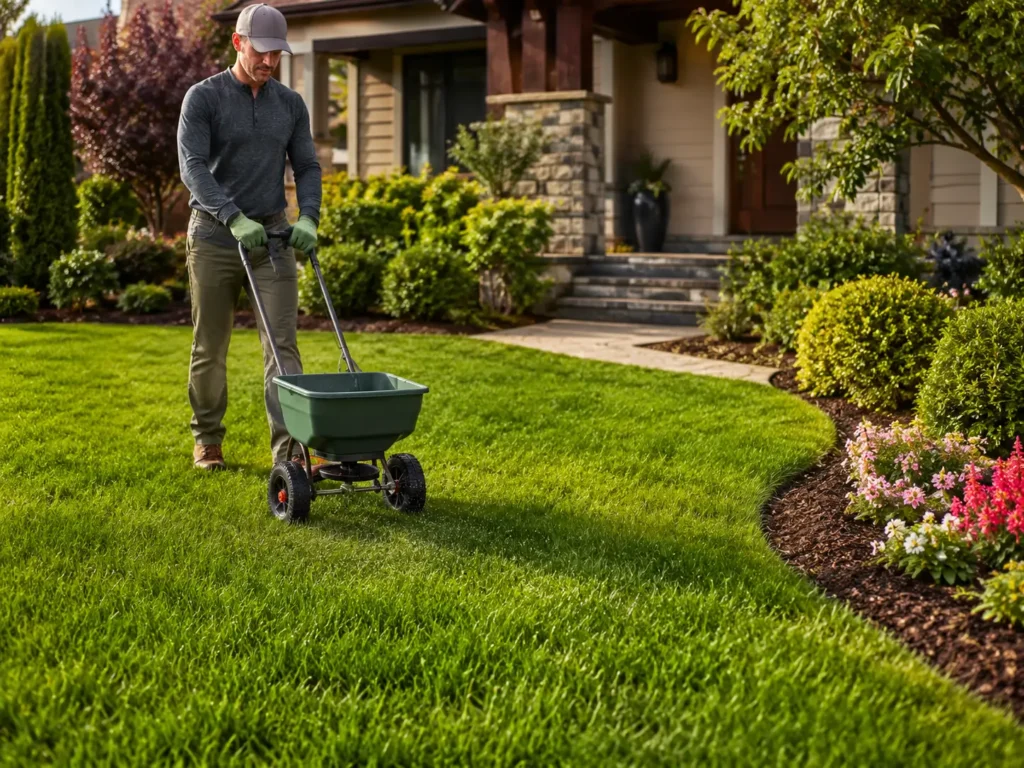
Common lawn pests include:
White grubs, which are beetle larvae that feed on grass roots.
Chinch bugs, which damage grass by feeding around the crown and lower stems.
Armyworms and cutworms, which chew grass blades and can cause rapid thinning.
Sod webworms, which feed close to the soil surface.
Ants, fleas and ticks, which may live or travel through lawns without directly feeding on the grass.
These insects behave differently and may require different treatment methods. A surface insecticide used for armyworms, for example, may not reach grubs feeding several centimetres below the soil.
This is why lawn insect control begins with identification rather than spraying.
Is Lawn Insecticide the Same as a General Pesticide?
Insecticide and pesticide are related terms, but they do not mean exactly the same thing.
Pesticide is the broad category for products used to manage unwanted organisms. Insecticides target insects, herbicides control weeds, fungicides manage fungal diseases and rodenticides control rodents.
This distinction matters because a product designed to kill weeds will not solve a grub infestation. Likewise, an insecticide will not correct brown patches caused by fungal disease, heat stress or poor soil drainage.
Combination lawn products may contain more than one active ingredient. Before using one, check precisely what it controls and whether every ingredient is appropriate for your lawn and surrounding landscape.
Confirm That Insects Are Causing the Damage
A patchy front lawn does not automatically mean insects are present. Grass can turn yellow, brown or thin for many reasons.
Check the Pattern of Damage
Irregular brown patches that continue spreading despite adequate watering may indicate insect activity. Grass that lifts easily from the soil like loose carpet may have root damage caused by grubs.
Chewed grass blades, caterpillar droppings or increased bird activity may point towards surface-feeding larvae. Tiny insects gathered around the edges of dry, expanding patches can indicate chinch bugs.
However, straight brown lines often suggest an irrigation problem, fertiliser spill or chemical injury. Circular patches may be associated with fungal disease. Damage concentrated along a regular walking route may be caused by soil compaction.
Inspect the Turf Closely
Look at the boundary between healthy and damaged grass rather than the centre of a completely dead patch. Active insects are more likely to be feeding where living turf meets visible damage.
Separate the grass blades and inspect the thatch layer. If you suspect grubs, lift a small section of turf and examine the root zone. Finding one insect does not always justify treatment. Many lawns contain small pest populations without suffering meaningful damage.
Consider Recent Conditions
Ask what changed before the symptoms appeared. Has the weather been unusually hot? Is one sprinkler blocked? Was fertiliser applied recently? Has the lawn been mown too short?
Correcting these problems may allow the grass to recover without insecticide.
Where Can Lawn Insecticide Be Used in Front Yard Landscaping?
Front yard landscaping usually contains more than turf. It may include flower beds, shrubs, trees, groundcovers, paths, driveways, entry areas and drainage points. Each area needs to be considered separately.
On Turfgrass
A lawn insecticide can be applied to turf when the label lists lawns or turfgrass as an approved treatment site. It should also name the target pest or pest group.
Check whether the product is suitable for your particular grass variety. Some formulations can stress sensitive turf, especially when applied at excessive rates, during extreme heat or when the lawn is already suffering from drought.
Around Trees and Ornamental Shrubs
Do not assume a lawn product can be sprayed over trees, shrubs or garden beds. Some insecticides are registered for both turf and ornamental plants, while others are restricted to lawn use.
A product that is safe around the root zone of a tree may not be suitable for spraying onto its leaves or flowers. Read the section of the label covering ornamental plants before treating landscaped areas.
In Flower Beds
Flowering plants attract bees, butterflies and other pollinators. Broad insecticide applications in these areas can affect beneficial insects as well as pests.
Avoid spraying open flowers or plants actively visited by pollinators. The United States Environmental Protection Agency advises users to follow pollinator precautions on pesticide labels and prevent spray drift into flowering areas. Similar label-based precautions apply in other jurisdictions.
If a flower bed has a localised pest problem, a targeted method such as hand removal, pruning, water spraying, insecticidal soap or another pest-specific treatment may be more appropriate than applying a general lawn insecticide.
Near Vegetable Gardens and Fruit Trees
A product approved for ornamental landscaping is not automatically approved for edible plants. Do not apply it to vegetables, herbs, fruit trees or soil used for food production unless the label specifically permits that use.
Maintain enough distance to prevent spray drift and runoff from reaching edible plants.
On Paths, Driveways and Other Hard Surfaces
Avoid unnecessary applications to concrete, paving and other impermeable surfaces. Insecticide landing on a driveway can be washed into gutters and stormwater drains.
If granules fall onto a path, sweep them back onto the approved treatment area rather than washing them away.
Around the House
Some products allow perimeter treatment around foundations to manage ants, fleas, ticks or other crawling insects. A lawn-use direction does not automatically include house foundations, walls, doorways or structural entry points.
For the best time to spray insecticide around the house, follow the product’s perimeter-treatment directions. Apply in calm, dry weather and avoid windows, doors, air intakes, drains and areas where children or pets regularly play.
What Is the Best Insecticide for a Lawn?
There is no single best insecticide for every lawn. The right choice depends on the pest, its life stage, the location of the infestation and the surrounding landscape.
Contact Insecticides
Contact insecticides work when the target insect encounters the treated surface or is directly exposed during application. They are commonly used against active surface feeders.
Coverage and timing are important. A contact product will not provide reliable control if the insect is hidden deep in the soil or protected inside a plant.
Systemic Insecticides
Systemic products are absorbed into plant tissue or move through the root zone. Certain products may be used preventively against specific soil-dwelling pests.
They should not be selected simply because they provide longer control. Their use around flowering plants requires particular care because some active ingredients can affect pollinating insects. The label must support the intended site, pest and application timing.
Granular Lawn Insecticides
Granular products are spread over the lawn using an appropriate applicator. Some need to be watered into the soil to reach root-feeding pests. Others must remain near the surface.
Granules can be convenient for larger turf areas, but uneven spreading may create untreated sections or areas receiving too much product. Visible granules may also attract the attention of children, birds or pets.
Liquid Lawn Insecticides
Liquid products can provide more precise coverage when correctly mixed and applied. They may be useful for spot treatments or surface-feeding pests.
They also create a greater risk of drift if sprayed in windy conditions. Accurate measuring, suitable equipment and careful nozzle control are essential.
Biological and Lower-Impact Options
Beneficial nematodes, microbial insecticides and certain pest-specific treatments may reduce reliance on broad-spectrum insecticides. Their effectiveness depends on accurate identification, soil temperature, moisture and the pest’s life stage.
Natural does not automatically mean harmless. Every product still needs to be used according to its directions.
When to Apply Insecticide to a Lawn
The best application time is when the target pest is present and vulnerable. Calendar-based spraying without monitoring can lead to unnecessary treatments.
Match Treatment to the Pest Life Cycle
Young larvae are often easier to control than mature insects. Preventive grub treatments, for example, need to be applied before or around the period when young larvae begin feeding. A curative treatment used after extensive root damage has occurred may deliver disappointing results.
Surface-feeding caterpillars are usually treated when they are small and actively feeding. Waiting until large areas of grass have disappeared makes recovery more difficult.
Local climate affects insect development, so seasonal timing can differ between regions.
Choose the Right Time of Day
Early morning or late afternoon may offer cooler temperatures and calmer conditions, but the product label and pollinator activity take priority.
Do not spray flowering plants while bees or other pollinating insects are foraging. If blooms are present in the treatment zone, delay the application or use a method that avoids exposing them.
Check the Weather
Avoid applying insecticide during strong wind, extreme heat or heavy rain. Wind can carry droplets into garden beds, neighbouring properties and public areas. Rain can wash some products away before they work and carry residues into drains or waterways.
Watering requirements vary. Some granular products must be irrigated into the soil, while certain liquid treatments require a rain-free period. Follow the instructions for the exact formulation rather than relying on a general rule.
Consider Mowing and Irrigation
Do not mow automatically before or after treatment. The correct approach depends on where the insect lives and how the product works.
For a surface treatment, excessively long grass may prevent the product from reaching the thatch. For another formulation, mowing too soon could remove treated foliage. Irrigation may activate a soil treatment but weaken a foliar treatment.
The label should determine the mowing and watering schedule.
How Often Should You Apply Insecticide to a Lawn?
Apply lawn insecticide only as often as the product label permits and the pest problem requires. There is no safe universal schedule.
Some products provide short-term control, while others remain active for several weeks or months. Reapplying too soon does not necessarily improve the result. It can damage the lawn, increase exposure, harm non-target organisms and contribute to insecticide resistance.
After treatment, monitor the edge of the damaged area. Look for reduced insect activity and signs of new grass growth. Remember that dead turf will not become green immediately, even if the insects have been controlled.
If damage continues, reconsider the diagnosis before spraying again. The original problem may have been disease, drought, poor irrigation or an insect not controlled by the chosen active ingredient.
Health Canada advises against using lawn pesticides when pest numbers do not warrant treatment or applying them too frequently. Its lawn guidance recommends correct identification and integrated pest management as the basis for long-term control.
Can Lawn Insecticide Be Harmful to Dogs and Other Pets?
Lawn pesticides can expose dogs and other animals when they walk over wet grass, lick treated paws, eat grass or contact visible granules. Risk depends on the product, dose, formulation and method of exposure.
Before applying insecticide, remove pets, water bowls, food dishes, bedding, chew toys and outdoor play equipment from the area.
Keep animals away for the full period stated on the label. The National Pesticide Information Center recommends keeping pets away until a treated area is completely dry and properly ventilated. For products that must be watered into the lawn, pets should remain away until the granules are no longer visible, the product has been adequately watered in and the lawn has dried.
Never use the phrase pet friendly as a substitute for reading the label. A product may present a lower risk after drying, but that does not make it harmless during mixing or application.
If a pet walks through a freshly treated area, prevent it from licking its paws. Contact a veterinarian or animal poison service if exposure is suspected or symptoms such as vomiting, drooling, weakness, shaking or unusual behaviour appear.
How to Protect Children, Visitors and Neighbours
A front yard is often more accessible than a backyard. Delivery drivers, neighbours, children and passing animals may enter the area without knowing it has been treated.
Remove children, toys and outdoor furniture before application. Keep people away for the label-specified re-entry period. The EPA’s pesticide safety guidance recommends keeping children and pets out of the treatment area until the pesticide has dried or for any longer period stated on the label.
Do not spray near a footpath when people are passing. Prevent drift onto neighbouring gardens, parked vehicles, letterboxes and public spaces. Where local regulations require notification or treatment markers, follow those requirements.
Store unused product in its original container with the label intact. Never transfer insecticide into a drink bottle, food container or unmarked sprayer.
How Often Should You Spray Insecticide on Plants?
Do not use a repeating spray schedule unless the plant-specific label calls for one.
First identify the insect and determine whether it is causing enough damage to justify treatment. Aphids, for example, may look alarming but often cause little lasting harm to established plants. The University of Minnesota Extension notes that aphids can frequently be managed using non-chemical methods or lower-risk treatments.
If spraying is necessary, treat only the affected plant parts and observe the minimum interval between applications. Do not exceed the maximum number of treatments allowed.
Test the product on a small, inconspicuous section when the label recommends a sensitivity test. Avoid spraying heat-stressed, drought-stressed or recently transplanted plants unless the directions confirm it is appropriate.
An Integrated Approach to Lawn Insect Control
A healthy lawn is better able to tolerate a small insect population. Integrated pest management combines monitoring, prevention, cultural care, biological controls and carefully selected chemical treatment.
Improve Lawn Health
Mow at a height suitable for the grass variety. Cutting too low weakens the turf and exposes the soil to heat and moisture loss.
Water deeply enough to support root development, but avoid keeping the lawn constantly wet. Correct drainage problems and reduce soil compaction where necessary.
Use fertiliser according to the lawn’s needs. Excessive nitrogen can encourage soft, vulnerable growth and create thatch problems.
Reduce Pest Habitat
Remove heavy thatch when it interferes with water movement or provides shelter for pests. Clear unnecessary debris and repair irrigation leaks.
Choose grass and landscape plants suited to the local climate. Plants struggling in the wrong location are more vulnerable to insects, disease and environmental stress.
Preserve Beneficial Insects
Not every insect in the front yard is a pest. Ladybirds, lacewings, ground beetles, parasitic wasps, bees and spiders contribute to a balanced landscape.
Broad-spectrum insecticides can reduce these helpful populations along with the target pest. Once natural predators disappear, some pest populations can rebound.
The landscaping philosophy at Front Yard Landscaping Ideas is most effective when appearance, plant health and ecological function are considered together. A lawn does not need to be biologically empty to look attractive and well maintained.
How to Apply Lawn Insecticide Safely
Read the Entire Label
Confirm the target pest, approved treatment site, application rate, reapplication interval, watering instructions and re-entry period. Check the environmental precautions and required protective clothing.
If the lawn, plant or pest is not listed, choose another product or contact a qualified local professional.
Measure the Treatment Area
Calculate the lawn area accurately. Guessing can lead to underapplication or overapplication.
Exclude flower beds, driveways, paths and other areas where the product is not intended to be used.
Prepare the Area
Remove toys, pet items, portable furniture and food containers. Cover or relocate anything that could be contaminated. Close nearby windows and doors when required.
Check the weather and confirm that wind or rain will not interfere with the application.
Wear the Required Protection
Use the gloves, clothing, footwear and eye protection stated on the label. More concentrated products may require additional precautions.
Do not eat, drink or smoke while mixing or applying insecticide. Wash your hands and exposed skin afterwards, and clean reusable equipment according to the manufacturer’s instructions.
Use a Targeted Application
Treat the affected area and any necessary surrounding margin. Avoid blanket spraying the entire front yard when the problem is localised.
Keep liquid spray close to the target surface to reduce drift. Sweep misplaced granules back onto the lawn instead of hosing them into the street.
Follow Post-Treatment Instructions
Water the product in only when directed. Keep people and pets away for the required period. Do not mow, irrigate or reapply until the instructions allow it.
Monitor the lawn over the following days or weeks. Combine pest control with suitable watering, mowing and repair so the turf can recover.
Common Lawn Insecticide Mistakes
One common mistake is treating brown grass without confirming an insect infestation. This often delays the correct solution while adding unnecessary pesticide to the landscape.
Another is assuming that more product will work faster. Pesticide rates are calculated for effectiveness and safety. A stronger mixture can injure turf and ornamental plants without delivering better control.
Spraying during wind or before heavy rain can move the product away from the target. Applying a lawn-only product to flowers, shrubs or vegetables is equally risky.
Routine application is another problem. Insecticide should respond to a known pest risk, not become an automatic part of every mowing or fertilising cycle.
Finally, many people confuse an application interval with a recommendation to spray. A label stating that a product may be reapplied after a certain number of days does not mean another application is always necessary.
When to Call a Lawn Care or Pest Control Professional
Professional help may be worthwhile when a large area is deteriorating quickly, the pest cannot be identified or the infestation returns after correct treatment.
A qualified professional can distinguish insect damage from disease, irrigation problems and chemical injury. They can also select a treatment suitable for the pest’s life stage and the layout of the front yard.
Professional advice is particularly valuable near ponds, waterways, schools, childcare areas, pet enclosures, beehives, vegetable gardens or properties with extensive flowering plants.
Ask what pest was identified, which active ingredient will be used, what areas will be treated and how long people and animals must remain away.
Conclusion
You can use lawn insecticide in front yard landscaping, but it should never be the first response to every brown patch or visible insect. Begin by confirming that insects are causing meaningful damage. Then choose a product labelled for the target pest, turf type and treatment area.
Pay close attention to flower beds, edible plants, pets, children, pollinators, paths and stormwater drains. Apply the minimum effective treatment in suitable weather and never exceed the label rate or reapplication frequency.
The best lawn insect control plan is not the one that uses the strongest product. It is the one that solves the correct problem while protecting the rest of the landscape. With accurate diagnosis, good lawn care and targeted treatment, your front yard can remain healthy without unnecessary spraying.
Frequently Asked Questions
Can you use lawn insecticide in front yard landscaping?
Yes. You can use it when the product label permits application to lawns in residential landscapes and lists the pest you need to control. Avoid applying a lawn-only product to flower beds, edible plants or other unapproved areas.
What is the best insecticide for a lawn?
The best option depends on the insect and its life stage. Surface-feeding caterpillars, root-feeding grubs and insects living in the thatch may require different treatments. Identify the pest before selecting a product.
When should you apply insecticide to a lawn?
Apply it when the target pest is active and vulnerable. Choose calm weather and follow the label’s requirements for temperature, rainfall, irrigation, mowing and time of application.
How often should you apply insecticide to a lawn?
Reapply only when the label permits it and monitoring shows that further treatment is necessary. Do not follow a general weekly or monthly spraying schedule.
Are lawn pesticides harmful to dogs?
They can be harmful during mixing, application or contact with wet treatments and visible granules. Remove pets and their belongings before treatment, and keep animals away until the label permits re-entry.
Can you spray lawn insecticide on garden plants?
Only if the label specifically lists the plant type or ornamental landscape use. A product registered for turfgrass alone should not be sprayed on flowers, shrubs, vegetables or fruit trees.
What is the best time to spray insecticide around the house?
Use it during calm, dry conditions when the target pest is active. Early morning or late afternoon may reduce heat and wind, but avoid spraying flowering plants while pollinators are visiting.
Can insecticide damage grass?
Yes. The wrong product, excessive rate, poor calibration or application during heat and drought can injure turf. Always check grass compatibility and application conditions before treatment.
Has lawn insecticide advice changed?
The core advice remains consistent. Identify the pest, follow the current product label, prevent exposure and avoid unnecessary applications. However, registrations, approved uses and label instructions can change, so an old article or product recommendation should never replace the current label.
Should you treat the entire front yard?
Usually not. If the infestation is limited to one section, targeted treatment can reduce pesticide use and protect beneficial insects. A full-lawn application is appropriate only when the label permits it and inspection shows that the pest is widely distributed.

Sara Bendrick believes your yard should be a place you actually look forward to coming home to. A licensed and bonded design-build contractor (C-27 #1006161), she founded Sarita Landscape Designs and has spent over twelve years designing residential outdoor spaces across Southern California with a real soft spot for curb appeal and low-water, no-lawn designs.
When she’s not on a job site, Sara’s on camera or on stage. She’s hosted yard-renovation shows including I Hate My Yard, Build It Like Bendrick, and Lawn & Order, written Big Impact Landscapes, given two TEDx talks, and serves as a spokesperson for Stihl. Her mission is simple, help people see the potential in the yard they already have.