
To landscape a front yard flower bed, begin by studying the space before buying a single plant. Note how many hours of sun the area receives, how water moves after rain, where windows and walkways sit, and how the bed will look from the street. Next, shape the bed with a gentle curve or clean geometric edge that complements the architecture of the house. Make it wide enough for layered planting rather than squeezing flowers into a narrow strip.
Prepare the soil by removing weeds and turf, loosening compacted ground, and adding compost where needed. Then arrange plants by mature height. Place small evergreen shrubs or taller perennials toward the back, medium plants through the center, and low flowers or groundcovers along the edge. Mix plants with different bloom times so the front yard has color from spring through fall. Leave enough space for mature growth.
Finish with a defined border, two to three inches of mulch, and a simple watering plan. Repeat a few plant varieties across the bed instead of using one of everything. This creates rhythm, improves curb appeal, and makes the flower bed look intentional rather than crowded. Consider views from the sidewalk, driveway, and entry.
That basic formula works whether you are creating a tiny garden beside the porch or redesigning all the flower beds in front of the house.
The interesting part comes next: deciding what kind of bed belongs in your particular front yard.
Some homes need soft, overflowing flowers. Others look better with restrained greenery and clean lines. A small front yard may benefit from one confident planting bed rather than several disconnected patches. A large lawn may need broader beds that give the house more visual weight.
The following front yard flower bed ideas cover those different situations while keeping one principle at the center of the design: the garden should look as though it belongs with the house rather than being added as an afterthought.
Table of Contents
What Makes a Front Yard Flower Bed Look Good
Beautiful flower bed landscaping is not simply about having more flowers. It is about creating order.
A successful front yard garden usually has four things working together.
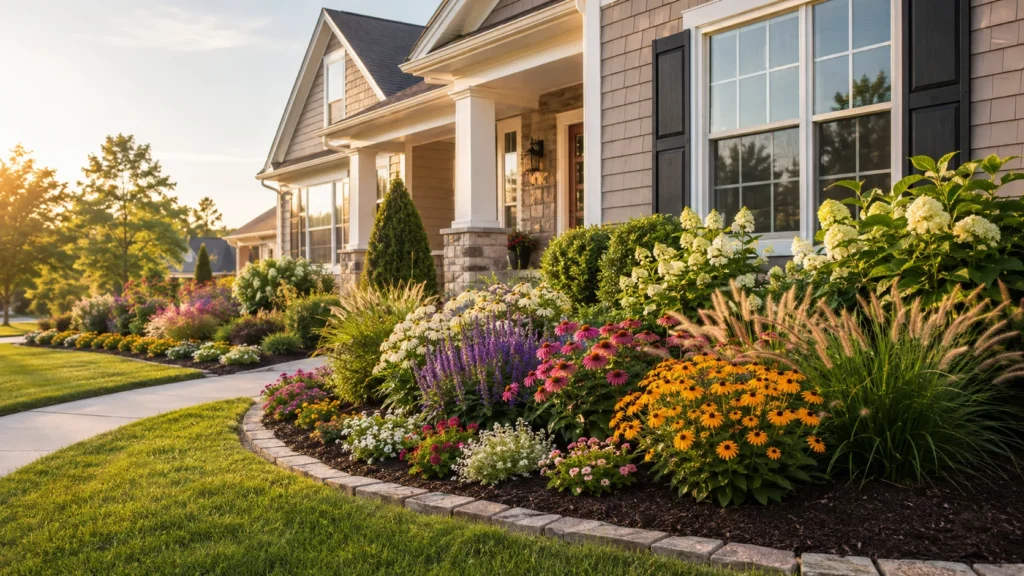
A Clear Shape
Before anyone notices the flowers, they notice the outline of the bed.
A flower bed with a deliberate edge instantly appears more finished. Curved beds can soften a traditional home or a large lawn, while straight beds often complement modern architecture, brick pathways, and formal entrances.
Avoid making curves too tight or wavy. One or two broad sweeps usually look more natural than a series of small bumps.
Layers of Different Heights
Good flower bed design creates depth.
Think of the planting in layers:
- Taller shrubs, ornamental grasses, or structural perennials toward the house
- Medium height flowering plants through the middle
- Low growing flowers and groundcovers toward the front edge
This approach keeps one plant from hiding another and makes even relatively simple garden bed ideas look more substantial.
Repeated Plants
A common beginner mistake is buying one plant of everything that looks attractive at the nursery.
The result can resemble a plant collection rather than a designed garden.
Instead, repeat plants.
Three salvia plants together create more impact than a single salvia surrounded by unrelated flowers. A row of repeated ornamental grasses can connect opposite sides of a bed. Groups of the same perennial help the eye travel through the landscape.
Repetition is one of the easiest ways to make inexpensive landscaping look professionally considered.
Something Attractive in Every Season
Flowers are only one part of a front yard landscape.
A garden that depends entirely on summer blooms may look wonderful for several weeks and nearly empty for the rest of the year.
Combine flowering plants with permanent structure such as evergreen shrubs, ornamental grasses, interesting bark, seed heads, and plants with colorful foliage.
The result is a front garden flower bed that continues working after the last flower fades.
21 Front Yard Flower Bed Ideas for Different Homes and Gardens
There is no single best flower bed design for every house. Architecture, available space, climate, sunlight, maintenance preferences, and budget all influence what will work.
These flower bed ideas can be adapted rather than copied exactly.
1. Create Layered Flower Beds in Front of the House
Layered foundation planting is one of the most reliable flower bed designs for the front of a house.
Start with a few structural shrubs near the foundation. Add medium height perennials in front of them, followed by lower flowers near the edge.
For example, a sunny bed might combine compact evergreen shrubs with coneflowers, salvia, ornamental grasses, and creeping groundcovers.
A partially shaded bed could use hydrangeas, hostas, heuchera, ferns, and shade tolerant groundcovers.
The important detail is mature size.
A shrub that appears small in a nursery container may eventually grow several feet wide. Leave sufficient room between plants, siding, windows, air conditioning equipment, and walkways.
The finished planting should frame the house, not swallow it.
2. Use Curved Flower Beds to Soften a Front Lawn
Curves can make a conventional front lawn feel more relaxed and welcoming.
Instead of running a narrow strip of flowers directly against the foundation, extend the bed outward at strategic points. A broad curve near the corner of the house can provide enough depth for shrubs, perennials, and seasonal flowers.
Curved front lawn flower bed ideas work particularly well where the lawn already feels overly rectangular.
Use a garden hose to experiment with the shape before removing grass. View it from several places, including the street.
A curve that looks dramatic while standing beside it may seem almost invisible from the curb.
3. Choose Straight Flower Beds for a Modern Front Yard
Not every garden needs curves.
Straight lines can create a calm, architectural look that suits contemporary homes.
Consider rectangular flower beds with a restricted plant palette. Ornamental grasses, compact evergreen shrubs, flowering perennials, and gravel can create strong visual interest without making the space feel busy.
Repeat the same plants at regular intervals.
This type of flower bed landscaping looks particularly effective beside:
- Concrete paths
- Modern porches
- Brick walls
- Large windows
- Minimalist entryways
Keeping the plant selection restrained is usually more important than choosing unusual plants.
4. Build a Small Flower Bed Beside the Front Door
Small front yard flower bed ideas do not need to feel insignificant.
A compact planting near the entrance can become one of the strongest focal points in the entire yard because visitors experience it at close range.
Choose one structural plant, two or three flowering varieties, and a low edging plant.
For example, you might combine a compact hydrangea with shade tolerant perennials and groundcover in a protected spot.
In full sun, a small ornamental grass surrounded by salvia, coreopsis, or other climate appropriate flowers could provide a similar structure.
Resist filling every inch immediately. Young plants need room to mature.
5. Line the Front Walkway With Flowers
A walkway flower bed naturally guides attention toward the entrance.
Low growing flowers are generally the safest choice beside a frequently used path because they are less likely to lean into the walking area.
Keep the planting broad enough to look intentional but not so dense that it makes the walkway feel narrow.
Repeated flowers on both sides can create a formal effect. A looser mix of perennials and grasses produces a softer garden style.
If the path is already narrow, plant primarily along one side rather than forcing beds onto both sides.
6. Add a Flower Bed Next to the Driveway
A flower bed next to a driveway can turn a large area of pavement into a much softer landscape feature.
Plants in this location face special conditions, however.
Driveways reflect heat. Vehicle doors need clearance. Snow, road salt, runoff, or occasional foot traffic may also affect plants depending on the climate.
Choose tough, compact plants and keep larger shrubs far enough away from vehicles.
A repeating border of low perennials or ornamental grasses often works better than delicate flowers that constantly spill across the driveway.
7. Create a Mailbox Flower Garden
A mailbox bed gives the front yard a focal point away from the house.
Keep the design simple.
A small circular or oval bed can include drought tolerant perennials, ornamental grasses, or compact annual flowers. Choose plants that will not block the mailbox or make access difficult.
Because these beds often sit farther from a water source, plants with modest watering requirements can make maintenance easier.
The best mailbox gardens look deliberate without becoming miniature jungles.
8. Design a Flower Bed Around a Lamp Post
Lamp post flower bed ideas work for the same reason mailbox beds do: they transform a practical object into part of the landscape.
Use the post as the center of a simple circular or softly curved planting.
Low flowers generally work best because tall plants can visually compete with the fixture.
You can also use one compact ornamental grass or small shrub for structure, surrounded by lower flowering plants.
Keep enough open space around electrical access points if the lamp requires maintenance.
9. Build a Flower Bed Around a Tree Carefully
Flower bed ideas around a tree can be beautiful, but trees require a little restraint.
Do not pile soil or mulch against the trunk. Avoid cutting large roots simply to create a planting area.
Instead, work with the existing soil level and use plants capable of competing with tree roots.
Shade tolerant groundcovers and perennials are often more practical than thirsty annual flowers.
Leave the root flare of the tree exposed.
A thin layer of mulch can visually connect the planting, but creating a deep mulch mound around the trunk can cause problems rather than improve the landscape.
10. Try a Raised Front Yard Flower Bed
Raised flower beds can add height and definition to a flat front yard.
They are especially useful where soil quality is poor or where a retaining structure is already needed because of a slope.
Materials might include:
- Natural stone
- Brick
- Concrete block
- Landscape timber suited to outdoor use
- Finished masonry that matches the house
The material should relate to something already present in the property.
For example, a brick home may look more cohesive with brick or stone edging than with an unrelated material introduced only around the garden.
Keep raised beds proportionate to the house. A very tall retaining wall can overpower a small front facade.
11. Plant a Full Sun Front Yard Flower Bed
Full sun front yard flower bed designs can support some of the richest color combinations.
The exact plant choices depend on climate, but sunny beds often accommodate plants such as coneflower, salvia, coreopsis, yarrow, catmint, black eyed Susan, ornamental grasses, and many sun loving annuals.
Before choosing plants, confirm what full sun actually means in the space.
An area receiving strong afternoon sun may be much hotter and drier than one receiving gentler morning sunlight.
Group plants with similar water needs together. This makes irrigation easier and reduces the chance of overwatering drought tolerant plants simply because a thirstier neighbor needs more moisture.
12. Turn a Shady Front Yard Into a Foliage Garden
A shaded front yard does not have to become a gardening problem.
Where flowers are limited, foliage can provide the visual interest.
Hostas, ferns, heuchera, shade tolerant grasses, groundcovers, and suitable flowering shrubs can produce layers of green, silver, burgundy, blue green, and chartreuse foliage.
Texture becomes especially important in shade.
Pair broad leaves with finer leaves and upright plants with spreading forms.
A shade garden often looks more sophisticated when color is used selectively rather than forcing large numbers of flowering plants into insufficient light.
13. Create a Low Maintenance Perennial Flower Bed
Low maintenance flower beds usually begin with the right plants rather than clever maintenance tricks.
Select perennials that suit the site’s sunlight, moisture, soil, and climate. Plants that naturally thrive in the conditions will generally demand less intervention.
Use larger groups of fewer varieties.
Leave enough room between plants.
Apply mulch where appropriate.
Avoid species known to spread aggressively unless you genuinely want them to fill large areas.
Adding evergreen structure can also help because the bed does not need to depend on constant seasonal planting for visual interest.
Low maintenance does not mean no maintenance. Even resilient flower beds require occasional weeding, pruning, dividing, watering, and refreshing.
14. Design a Cottage Style Front Flower Garden
A cottage flower garden is ideal for anyone who prefers abundance over rigid symmetry.
The style combines layers of flowers, herbs, ornamental grasses, and shrubs in a loose arrangement.
The trick is controlled informality.
Use repetition beneath the apparent wildness. Repeat two or three flower varieties throughout the bed. Maintain a clear edge. Keep taller plants away from paths.
A well designed cottage garden feels generous and spontaneous.
A poorly planned one simply feels crowded.
15. Use Native Plants for a Front Yard Flower Garden
Native plants can be an excellent foundation for front yard landscaping when species are chosen for the local conditions.
They can support local insects and wildlife while providing flowers, foliage, seeds, and seasonal texture.
Native does not automatically mean maintenance free, however.
A plant may be native to a broad region while still being poorly suited to the specific moisture, soil, or sunlight conditions in your yard.
Choose plants based on both regional suitability and the actual planting site.
For a polished front yard, native plants can be grouped in repeated masses and combined with clearly defined edges. That structure helps naturalistic planting look intentional from the street.
16. Build a Pollinator Friendly Flower Bed
A pollinator garden can also be a beautiful front garden.
Aim for a long flowering season rather than one spectacular month.
Include plants that bloom at different points from spring through fall and use several plants of the same species together where space permits.
Avoid treating the bed only as a collection of flowers.
Grasses, stems, seed heads, host plants, water sources, and undisturbed areas may also contribute to habitat.
You can keep the street facing edge relatively neat while allowing greater naturalism deeper inside the bed.
This combines ecological value with strong curb appeal.
17. Use Ornamental Grasses for Movement and Texture
Flowers provide color. Ornamental grasses provide movement.
Their fine leaves create contrast with broad leaf shrubs and flowering perennials, while seed heads can remain attractive late into the season.
Compact varieties can be repeated through a front yard garden bed as accents.
Larger grasses need more thought because they can quickly dominate small spaces.
Check mature height and spread carefully before planting near windows, walkways, or the front door.
18. Create Four Season Interest With Evergreen Shrubs
One of the smartest flower bed landscaping ideas is to stop thinking exclusively about flowers.
A few well placed evergreen shrubs provide permanent visual anchors.
They keep the garden from looking bare during winter or between flowering periods.
Rather than planting a continuous hedge across the foundation, consider using evergreen shrubs at corners, near entrances, or as repeating punctuation throughout the bed.
Then soften the structure with flowering perennials and seasonal plants.
This balance of permanent and changing elements tends to age better than a bed planted entirely with annual flowers.
19. Frame the Bed With Stone or Brick Edging
Edging changes the way a flower bed reads from the street.
A clean edge separates lawn from planting and reinforces the shape of the garden.
Natural stone can produce a relaxed look. Brick works well around traditional houses. Steel or discreet landscape edging can provide a cleaner contemporary appearance.
Use the same material elsewhere in the property when possible.
If the walkway is brick, repeating brick around the bed can visually connect the landscape to the house.
Avoid adding too many competing materials. Stone edging, timber beds, decorative gravel, brick paths, and several colors of mulch in one small yard can make the landscape feel fragmented.
20. Make a Simple and Cheap Front Yard Flower Bed
Cheap flower bed ideas are often better when they rely on patience rather than inexpensive decorative objects.
Start with a good bed shape and fewer healthy plants.
Choose perennials that can eventually be divided.
Use compost where the soil genuinely needs improvement.
Buy smaller plants when waiting for them to mature is reasonable.
Repeat affordable varieties instead of purchasing many different specimens.
You can also phase the project.
Complete one well designed flower bed this year and expand it later rather than spreading the budget across several unfinished areas.
Simple front yard flower bed ideas often have greater curb appeal because the eye can understand them immediately.
21. Mix Containers Into an Existing Flower Bed
Containers are useful when you want seasonal color without redesigning the entire garden.
A large planter near the entrance can provide a strong focal point. Smaller pots can fill temporary gaps while young perennials mature.
For a cohesive appearance, relate the container material or color to the house.
Containers also make it easier to experiment.
If a color combination does not work, it can be changed next season without digging up the permanent landscape.
Use them as accents rather than scattering unrelated pots across every available surface.
How to Plan a Flower Bed in Front of the House
The best time to make design decisions is before digging begins.
A simple planning process prevents many of the problems that make front yard flower beds difficult to maintain later.
Study the Front Yard From the Street
Walk across the street if it is safe and look back at the house.
What does the landscape need?
Perhaps the house appears too tall and needs planting to visually anchor it.
Maybe a large driveway dominates the property.
Perhaps one side of the facade feels empty.
The solution should respond to the house rather than merely filling unused soil.
Identify Sun and Shade
Observe the garden several times during the day.
A spot that looks sunny during breakfast may be shaded for most of the afternoon.
Plant labels commonly describe light needs using terms such as full sun, part sun, part shade, and shade. Those labels matter.
Trying to solve a sunlight mismatch with additional watering or fertilizer rarely produces a satisfying long term garden.
Check Drainage
Pay attention after heavy rain.
Water should not remain pooled around plant roots or directly beside the foundation for long periods.
If the area has drainage problems, address those before installing a valuable flower garden.
Plant selection can accommodate some moisture conditions, but landscaping should not conceal a larger drainage issue.
Measure the Bed
Very narrow flower beds are difficult to layer.
Where space allows, make foundation beds deep enough for plants of more than one height.
Measure the available area and account for:
- Mature shrub width
- Walkway clearance
- Windows
- Porch steps
- Downspouts
- Utility equipment
- Hose access
- Driveway visibility
- Property boundaries
Plants grow. A successful layout anticipates what the bed will look like in several years rather than only on planting day.
How to Choose Flowers for a Front Yard Flower Bed
The best flowers for a front yard flower bed are not simply the prettiest flowers at the garden center.
They are the plants that fit the site.
Start With Your Climate
Choose plants suitable for your local winters, summers, rainfall patterns, and growing conditions.
A beautiful plant that struggles every season becomes an expensive maintenance project.
Local nurseries, regional horticultural resources, and extension services can help identify plants appropriate for the area.
Match Plants to Sun Exposure
For sunny beds, look for plants that tolerate the intensity and duration of sun your yard receives.
For shade, prioritize shade tolerant flowers and foliage plants rather than trying to force sun loving plants into poor conditions.
Mix Perennials and Annuals
Perennials return for multiple growing seasons when they are suited to the climate.
Annuals can provide intense seasonal color and flexibility.
Using both can work well.
Let perennials create the permanent backbone of the flower garden, then use a smaller number of annuals in strategic places where extra color is useful.
Include Shrubs
Shrubs help connect flower beds to the scale of a house.
Compact evergreen or flowering shrubs can provide height, structure, and year round form.
Check mature size carefully.
Do not plant a shrub that naturally wants to become eight feet wide in a space where you intend to keep it at three feet through constant pruning.
Plan for Bloom Time
A beautiful planting in May can become surprisingly plain in August if every plant flowers at once.
Look for a sequence.
Choose some plants that contribute in spring, others in summer, and others later in the season.
Foliage and structural plants fill the gaps between bloom periods.
How to Create a New Front Yard Flower Bed Step by Step
If you are wondering how to create a flower bed from scratch, the process is easier when the work happens in the right order.
Step 1. Mark the Shape
Lay a garden hose or rope on the lawn to test the bed outline.
Move it until the shape looks natural from the street and from the front door.
For straight beds, use stakes and string to establish crisp lines.
Step 2. Remove Grass and Weeds
Remove existing turf and persistent weeds before planting.
Taking time here is easier than trying to pull established grass from between new perennials later.
Avoid burying aggressive weeds beneath a thin layer of soil and hoping they disappear.
Step 3. Understand the Soil
Garden soil affects drainage, root growth, moisture, and nutrient availability.
If the soil is compacted or poor, improve it appropriately before planting. Compost is useful in many situations, but more amendment is not always better.
The goal is healthy soil, not an unnaturally rich pocket surrounded by completely different native soil.
Step 4. Set Plants in Place Before Digging
Arrange the nursery pots on top of the soil.
Then step back.
Look from the sidewalk.
Look from the driveway.
Look through the front window.
Move plants until the arrangement makes sense.
This is much easier than transplanting them after every hole has been dug.
Step 5. Plant for Mature Size
Read the expected height and spread of each plant.
Young landscapes often look sparse immediately after installation. That is normal.
Planting too closely for instant fullness creates overcrowding later.
Step 6. Water Thoroughly
New plants need consistent attention while roots become established.
Water deeply enough to reach the root zone rather than repeatedly wetting only the surface.
The appropriate schedule depends on soil, climate, rainfall, plant type, and season.
Step 7. Add Mulch
A moderate layer of mulch helps reduce moisture loss, suppress some weeds, and give the flower bed a finished appearance.
Keep mulch away from direct contact with trunks, crowns, and the foundation where appropriate.
More mulch is not automatically better.
What Is the Best Mulch for Front Yard Flower Beds
There is no universal best mulch for every garden.
Shredded bark and wood mulch are popular because they provide an organic appearance and gradually break down.
Pine bark, wood chips, leaf based mulch, and other locally available materials may also work depending on the planting and region.
The important considerations are function and appearance.
Good mulch for flower beds should:
- Allow water to reach the soil
- Help reduce evaporation
- Suppress weeds without being excessively deep
- Suit the style of the landscape
- Be appropriate for the plants being grown
Avoid building thick mulch against shrub trunks or creating mulch volcanoes around trees.
A restrained mulch layer generally looks better and is healthier for the landscape.
Flower Bed Edging Ideas for Better Curb Appeal
Edging is one of the least glamorous parts of garden design and one of the most visually important.
A crisp edge makes even a young planting look cared for.
Options include natural trench edging, brick, stone, steel, concrete, and other landscape edging products.
Choose according to the style of the home.
A cottage garden may suit a softer natural edge. A contemporary house may look better with a clean metal or masonry line.
Whatever you choose, consistency matters more than novelty.
One edging style repeated across the front yard creates unity.
Flower Bed Color Ideas That Do Not Look Chaotic
Color can make a front yard memorable, but too many unrelated colors can weaken the overall design.
Start by choosing a simple palette.
Monochromatic Planting
Use variations of one color such as white, purple, pink, or yellow.
The different shapes and textures keep the bed interesting without relying on multiple colors.
Complementary Colors
Pair colors that contrast strongly.
Purple flowers with yellow flowers can produce a lively garden, for example.
Use one color more heavily and the other as an accent rather than splitting everything equally.
House Coordinated Colors
Look at permanent elements such as:
- Brick
- Siding
- Shutters
- Front door color
- Roofing
- Stone
- Walkways
The flower garden does not need to match the house exactly. It should simply avoid fighting with it.
At Front Yard Landscaping Ideas, this is one of the most useful principles to remember: the house is already the largest object in the landscape, so the planting should work with it.
Common Front Yard Flower Bed Mistakes
Sometimes the difference between an average flower bed and a polished one is simply avoiding several predictable mistakes.
Making the Bed Too Narrow
A thin strip of soil along the house leaves little room for layering.
Where the yard allows it, deeper beds create a more natural transition between the lawn and architecture.
Planting Shrubs Too Close to the House
Small nursery plants can be deceptive.
Check their mature spread and keep appropriate clearance from walls, windows, vents, walkways, and equipment.
Using Too Many Plant Varieties
Variety sounds exciting, but excessive variety creates visual noise.
Repeat successful plants.
The garden will still contain diversity without looking random.
Ignoring Winter
If every visible plant disappears or becomes bare in winter, the front yard may lose its structure for months.
Evergreens, grasses, branches, bark, and persistent seed heads can keep the bed visually useful beyond flowering season.
Choosing Plants Before Studying the Site
Shopping first and planning later is one of the fastest ways to create unnecessary maintenance.
Know the sunlight, soil, drainage, available space, and climate before deciding what to plant.
Forgetting the View From the Street
A front yard is seen from farther away than a backyard garden.
Tiny details can disappear.
Larger plant groups and clearer shapes generally create stronger curb appeal than dozens of small individual features.
How to Make Front Yard Flower Beds Look Professional
Professional looking landscaping is less about expensive plants and more about disciplined choices.
Focus on a few principles.
- Repeat plants instead of buying one of everything
- Use clearly defined bed shapes
- Plant in groups rather than isolated dots
- Keep plant heights proportional to the house
- Leave enough space for mature growth
- Combine permanent structure with seasonal flowers
- Limit the number of edging and hardscape materials
- Keep lawn and bed edges tidy
- Choose a restrained color palette
- Hide practical elements where possible without blocking access
Most importantly, edit.
A landscape becomes stronger when unnecessary elements are removed.
You do not need a statue, birdbath, decorative sign, six planter styles, three kinds of stone, and twelve flower colors in the same small bed.
Plants need room to be noticed.
Low Maintenance Front Yard Flower Bed Tips
Low maintenance landscaping begins during design.
The more accurately the plants fit the conditions, the less intervention they tend to require later.
Choose the Right Plant for the Right Place
A moisture loving plant in dry soil becomes a watering problem.
A full sun perennial in heavy shade becomes a weak plant.
A large shrub planted beneath a low window becomes a pruning problem.
Good placement prevents work.
Reduce Bare Soil
Open soil provides opportunities for weeds.
As plants mature, appropriate groundcovers, perennials, shrubs, and mulch can reduce exposed spaces.
Do not eliminate all spacing immediately, however. Plants still need room for airflow and growth.
Install Plants in Groups
Grouping plants with similar needs simplifies watering and care.
It also creates a stronger visual effect.
Keep the Design Simple
A garden containing thirty plant varieties may require thirty different decisions about pruning, dividing, deadheading, feeding, and seasonal care.
A garden built around eight or ten dependable plants is easier to understand.
How to Refresh an Existing Front Yard Flower Bed
You may not need to start over.
Many tired flower beds can be improved with selective editing.
Begin by identifying what still works.
A mature shrub may provide valuable structure. A healthy perennial group may simply need dividing. An existing tree could become the anchor for a redesigned bed.
Then remove plants that are:
- Dead
- Diseased
- Severely overcrowded
- In the wrong location
- Blocking paths or windows
- Requiring more maintenance than they provide in value
Redefine the edge, fill major gaps strategically, and add mulch after planting.
Sometimes widening an existing bed by only a few feet creates enough room to turn a cramped foundation strip into a proper layered garden.
Final Thoughts on Front Yard Flower Bed Ideas
The strongest front yard flower bed ideas are not necessarily the most complicated.
A good garden begins with observation.
Look at the architecture. Watch the sunlight. Understand the soil. Notice drainage. Decide which views matter most. Then choose plants that can genuinely thrive there.
From there, design becomes simpler.
Create a confident bed shape. Use taller plants for structure, medium plants for body, and lower plants along visible edges. Repeat successful varieties. Include flowers with different bloom periods. Add evergreen or structural plants so the landscape does not disappear after summer.
Most importantly, give the garden time.
New flower beds rarely look finished during their first week. Plants grow, spread, flower, soften edges, and begin relating to one another over several seasons.
Whether you want simple front yard flower bed ideas, a small flower garden, low maintenance foundation planting, or a completely new front yard landscape, the goal is the same: create a garden that makes the house feel more welcoming without creating unnecessary work.
That is the approach behind Front Yard Landscaping Ideas: design around the property first, then let the plants bring it to life.
Frequently Asked Questions
How Do I Design a Flower Bed in Front of My House?
Start by evaluating sunlight, drainage, available width, windows, pathways, and the architectural style of the house. Create a clear bed shape and plan plants in layers. Place taller shrubs or perennials toward the rear, medium plants in the center, and shorter flowers or groundcovers near the edge. Repeat key plants throughout the bed for a cohesive appearance.
What Flowers Are Best for a Front Yard Flower Bed?
The best flowers are those suited to your climate, sunlight, soil, and moisture conditions. Sunny gardens may support plants such as coneflowers, salvia, coreopsis, yarrow, and suitable ornamental grasses. Shaded beds may favor hostas, heuchera, ferns, and shade tolerant flowering plants. Always verify local growing requirements before planting.
How Wide Should a Flower Bed Be in Front of a House?
There is no single required width, but a bed should generally be deep enough to support layered planting and remain proportional to the home. Extremely narrow foundation beds can look cramped. Larger houses often benefit from deeper beds, while small homes may need more compact planting. Mature plant size should determine the final spacing.
What Can I Put in a Small Front Yard Flower Bed?
Use a limited number of plants with distinct roles. Start with one compact structural shrub or ornamental plant, add a small group of flowering perennials, and finish with low growing flowers or groundcover. Repeating a few plants typically makes a small bed look larger and more organized than filling it with many different varieties.
How Can I Make a Front Yard Flower Bed Low Maintenance
Choose plants adapted to the site’s sunlight, climate, soil, and moisture. Use fewer plant varieties in larger groups, leave appropriate mature spacing, apply mulch, and include dependable shrubs or perennials. Avoid plants that require frequent pruning or watering if low maintenance is a priority.
How Do I Make a Cheap Flower Bed Look Good
Spend money first on healthy soil preparation and a strong layout rather than decorative accessories. Use smaller plants and allow them time to grow. Repeat affordable perennials, divide mature plants when appropriate, maintain crisp edging, and use mulch to unify the bed. A simple design usually looks more polished than a crowded collection of inexpensive decorations.
Should I Use Annuals or Perennials in Front Yard Flower Beds?
Using both can work well. Perennials provide a long term framework, while annuals can add concentrated seasonal color. A practical approach is to establish most of the bed with shrubs and perennials, then leave selected spaces for annual flowers that can be changed from season to season.
How Do I Landscape a Flower Bed Against the House?
Allow adequate clearance between plants and the structure, especially around windows, vents, siding, downspouts, and equipment. Choose shrubs according to their mature size rather than their nursery size. Plant taller material toward the rear without allowing it to crowd the building, then create lower layers toward the lawn or walkway.
How Much Mulch Should I Put in a Front Yard Flower Bed?
A layer of roughly two to three inches is commonly sufficient for many landscape beds. Avoid piling mulch directly against tree trunks, shrub stems, or plant crowns. The appropriate depth can vary with mulch type and site conditions, so the objective is to cover soil without burying plants.
What Is the Easiest Front Yard Flower Bed for Beginners?
A simple layered perennial bed is often easiest. Choose one or two compact shrubs for structure, two or three dependable perennial varieties, and one low growing edging plant. Repeat those plants rather than adding numerous varieties. Match every plant to the site’s sunlight and climate, then mulch and water consistently while the garden becomes established.

Sara Bendrick believes your yard should be a place you actually look forward to coming home to. A licensed and bonded design-build contractor (C-27 #1006161), she founded Sarita Landscape Designs and has spent over twelve years designing residential outdoor spaces across Southern California with a real soft spot for curb appeal and low-water, no-lawn designs.
When she’s not on a job site, Sara’s on camera or on stage. She’s hosted yard-renovation shows including I Hate My Yard, Build It Like Bendrick, and Lawn & Order, written Big Impact Landscapes, given two TEDx talks, and serves as a spokesperson for Stihl. Her mission is simple, help people see the potential in the yard they already have.