
To make your front yard more welcoming, create a clear path to the front door, soften hard surfaces with layered planting, and add gentle lighting around the entrance. Keep garden beds tidy, choose plants suited to your climate, and give visitors enough space to approach comfortably. A visible house number, an inviting porch and a few thoughtfully placed pots can make a noticeable difference. You do not need a large lawn or an expensive redesign. Start with what people see and experience from the street, then improve the details that make arriving at your home feel easy, comfortable and personal.
Think about arriving home with shopping bags, greeting a neighbour at the gate or welcoming someone who has never visited before. Those everyday moments are useful tests of your front garden design. Good kerb appeal begins with a frontage that looks cared for and makes the entrance easy to understand.
This guide from Front Yard Landscaping Ideas explains how to bring paths, planting, lighting and practical details together to create an entrance that feels considered and comfortable.
Table of Contents
Start With the View From the Street
Walk outside your property and approach it as a visitor would. Look towards the front door, then follow the route you expect guests to take.
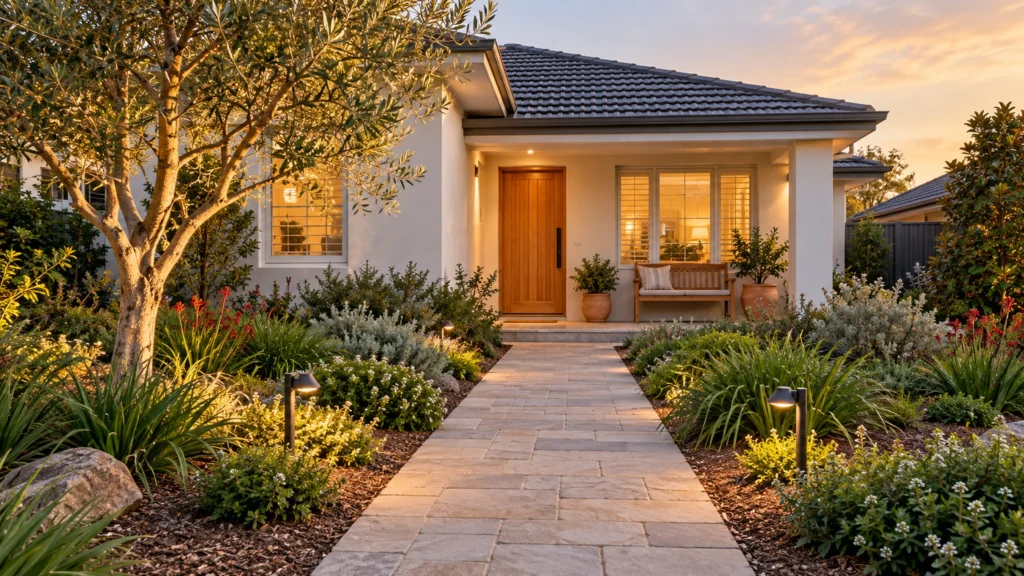
Ask yourself:
- Is the entrance easy to identify?
- Can someone open the gate and walk through comfortably?
- Are plants, bins or parked vehicles blocking the approach?
- Is there somewhere to stand while the door opens?
- What becomes difficult to see after sunset?
Take a photograph from the footpath. It can reveal things you overlook every day, such as an oversized shrub covering a window or several unrelated pots competing for attention.
Before buying anything, sketch the main features you need to keep. Include the driveway, existing trees, garden beds, gate and front steps. University of Missouri Extension recommends assessing existing conditions and planning the layout before selecting individual plants.
Also note where rainwater collects and which areas receive morning sun, afternoon heat or deep shade. These observations help turn attractive garden ideas into a workable plan.
Create a Clear Garden Path to the Front Door
A welcoming entrance gives visitors a straightforward route from the street or driveway to the house.
Follow the Natural Walking Route
Watch how people already move through the yard. A worn shortcut across the lawn may show that the existing path takes an inconvenient route.
A straight walkway suits a direct approach. A gentle curve can work around an established tree or connect an offset gate with the entrance. Give curves a practical purpose so visitors are comfortable following them.
Before changing a path, mark its proposed edges and walk the route. Test it while carrying shopping or pushing a pram. Include space for the gate to swing and for planting to grow without narrowing the passage.
Choose Comfortable, Stable Paving
For the main entrance, prioritise a firm, even surface with good grip. Widely spaced stepping stones and loose gravel can make access more difficult for people using wheelchairs or walking aids. Gardening charity Thrive recommends stable paths, suitable surfaces and adequate manoeuvring room in accessible garden design.
Brick, concrete pavers and appropriately finished stone can each suit different house styles. Check the actual product’s suitability for outdoor pedestrian use, particularly when wet.
Observe the path after rain. Persistent puddles, uneven paving and slippery patches deserve attention before decorative upgrades. Where water collects near the house, have the drainage assessed before adding more paving or raising garden beds.
Make the Front Door the Main Focal Point
People should be able to recognise the entrance without searching behind foliage.
University of Missouri Extension identifies the doorway as the main focal point of the front landscape and cautions against oversized planting that hides or crowds it.
Start with the details immediately around the door:
- Keep the house number visible from the approach.
- Clear space around the door handle, bell and letterbox.
- Position pots outside the door swing and walking route.
- Store hoses, tools and spare containers neatly.
- Keep the doorstep clean and the welcome mat flat.
Two matching planters can frame a centred doorway. An entrance tucked into a corner may work better with one substantial pot on the open side. Check the arrangement from the street and from the doorstep.
Choose container colours that relate to an existing feature, such as the brickwork, window frames or paving. This gives the entrance a sense of continuity without requiring every item to match.
Layer Trees, Shrubs and Groundcovers
Planting can soften a fence, bring colour to a blank wall and make a broad driveway feel less dominant.
Think about plants at three levels: taller features that give height, medium planting that fills the beds, and low planting that finishes the edges. Keep the doorway and important views open.
For example, a bed beside a plain wall could contain a suitable shrub towards the back, a repeated group of flowering perennials in the middle and low groundcover near the border. Repeating one plant along the bed helps connect the arrangement visually.
Allow Space for Mature Growth
Read the mature height and width on plant labels. A small nursery pot can become a shrub that reaches across the path or requires regular cutting to fit its position.
Mark the expected spread before planting, especially beside windows, gates and walkways. University of Missouri Extension recommends allowing plants enough space to reach their size without constant pruning to keep them in bounds.
Keep existing healthy trees in mind when planning. Their shade and roots affect what can grow beneath them, and new excavation may require specialist advice.
Combine Evergreen Structure With Seasonal Colour
Flowers give an entrance personality, while foliage provides something to enjoy between flowering periods.
Try combining contrasting leaf shapes, such as rounded shrub foliage with a few upright, strappy plants. Add flowering plants where you will notice them from the path or front window.
When choosing flowers, check their flowering periods. A simple seasonal list can reveal whether everything blooms at once and leaves the entrance quiet for the rest of the year.
Choose Plants for Your Climate and Garden Conditions
The best plants for front yard landscaping suit the place where they will grow.
A sheltered porch, an exposed coastal boundary and a sunny bed beside concrete can present different conditions within the same property. Match your choices to sunlight, soil, drainage, wind and available space.
Water Corporation recommends climate-suited planting and grouping plants with similar water needs when planning a low maintenance garden.
Use Native Plants Where They Suit the Site
Locally appropriate native plants can be useful starting points, but the word native does not make every plant suitable for every Australian garden. Check the species or cultivar against your particular conditions.
The following examples appear in Water Corporation’s garden designs. Use them as regional starting points when discussing options with a local nursery.
| Planting role | Examples to consider | What to check |
|---|---|---|
| Shrub structure | Coastal correa and suitable westringia cultivars | Mature size and suitability for the position |
| Strappy foliage | Dianella Little Rev and Lomandra Little Con | Leaf spread beside paths and growing conditions |
| Flower colour | Kangaroo paw | Sun exposure, drainage and cultivar size |
| Groundcover | Creeping boobialla and low-growing grevillea cultivars | Eventual spread and room to grow |
Choose plants for the job they need to do. A shrub intended to screen a bin area has different requirements from a groundcover edging a narrow path.
For pots, check drainage holes, container size and the plant’s watering needs. Place each container where you can reach it easily for routine care.
Add Gentle Outdoor Lighting Around the Entrance
Return to the front yard after dark. The places that need light are often obvious: the gate latch, a change in level, the path and the doorstep.
DarkSky International and the Illuminating Engineering Society recommend directing outdoor light where it is needed, limiting brightness, using warmer light where possible and controlling when lights operate.
Apply those principles by:
- Aiming path lights towards the walking surface.
- Making steps and level changes easy to distinguish.
- Shielding fittings that shine directly into approaching visitors’ eyes.
- Using suitable timers or motion sensors where helpful.
Stand at the gate and check the result from a visitor’s eye level. Look for both dark gaps and uncomfortable glare.
If you choose solar lights, assess their performance in the actual position through the evening. For permanent lighting, arrange professional installation and check that the fittings suit their outdoor location.
Make the Front Porch Comfortable and Personal
A front porch offers somewhere to pause, exchange a few words or sit while waiting for someone.
If space allows, add a bench or a pair of comfortable chairs. Leave enough room to walk past when someone is seated and keep the door swing clear.
Try the furniture position before buying additional pieces. Sit there at the time of day you would use it. You may discover that the afternoon sun is too strong or that a small change in angle creates a more pleasant outlook.
Balance Privacy With an Open Approach
Place screening where privacy is needed, such as beside a chair or in front of a low living room window. Keep the gate and route to the door easy to understand.
A useful test is to ask what you want to screen. It might be a particular view from the pavement rather than the entire frontage. That distinction can help you choose the position and size of a hedge, trellis or screen.
Finish with a few details you enjoy, such as a favourite flowering pot or a seat overlooking the garden. Give each item enough room to be useful.
Make a Small Front Yard Feel More Spacious
Small front yard landscaping works best when every feature has a clear purpose.
Start with the space needed for walking, opening doors and accessing bins. Plan the planting around those everyday movements.
Try these practical adjustments:
- Use one coherent garden bed instead of several tiny planting pockets.
- Repeat a small selection of plants across the space.
- Choose pots in proportion to the doorway.
- Use a suitable climber on a support where ground space is limited.
- Keep furniture and decorative objects out of the central approach.
Look at the garden from inside the house, too. A thoughtfully placed plant outside a front window may be more enjoyable than an ornament visible only from the street.
For a narrow frontage, concentrate on a comfortable path and one strong planting area. There is no need to squeeze in seating if it makes arriving at the door awkward.
Plan for Low Maintenance and Healthy Plant Growth
A manageable garden is easier to keep welcoming through busy weeks.
Choose a level of care you can sustain. Someone who enjoys regular gardening may welcome seasonal pots and clipped hedges. A household with little spare time may prefer fewer containers and planting that needs less frequent attention.
Group Plants by Watering Needs
Hydrozoning means placing plants with similar water requirements together. Water Corporation recommends this approach to improve watering efficiency and reduce overwatering.
Apply it when deciding which plants share a bed or irrigation zone. Review watering as conditions change, and check the soil rather than assuming every plant needs the same schedule.
Mulch Garden Beds Thoughtfully
Mulch helps reduce moisture loss and suppress weeds. Use a type and depth appropriate to the planting, and keep it clear of plant stems and tree trunks. Water Corporation includes these practices in its waterwise garden guidance.
Keep mulch contained within the beds so it does not spill across the entrance path. Leave drainage points and inspection access clear.
Keep Lawn Where It Serves a Purpose
A lawn can provide useful space for play or an open area that suits the house. Consider how much of it you use and how much care it requires.
Where grass struggles or narrow strips are awkward to maintain, suitable groundcovers or planted beds may be worth considering. University of Missouri Extension identifies reducing unnecessary turf and simplifying awkward mowing areas as ways to manage landscape maintenance.
Whatever you choose, include ongoing jobs in the plan: weeding, pruning, clearing leaves and checking irrigation.
Improve Your Front Yard on a Budget
Begin with the problem visitors notice most. Cleaning a neglected entrance or clearing an obstructed path may be more useful at first than buying new plants.
Use this table to choose a practical starting point.
| What feels unwelcoming | First improvement to consider | How it helps |
|---|---|---|
| The entrance is hard to find | Clear the view and improve the house number | Makes arrival more straightforward |
| The doorstep feels crowded | Relocate pots and stored items | Creates room to approach and wait |
| Garden beds look neglected | Weed, tidy edges and refresh suitable mulch | Gives the planting a cared-for appearance |
| Plants keep outgrowing the path | Replace unsuitable plants with appropriately sized choices | Reduces crowding and repeated trimming |
| The approach is dark | Improve lighting at the path and entrance | Helps visitors see where they are walking |
| The frontage feels bare | Complete one planned planting area | Establishes a clear starting point for later work |
Retain serviceable paving, healthy plants and useful containers where they fit the plan. Repositioning existing items can help you test an arrangement before committing to purchases.
For larger changes, work in stages. Resolve access and drainage first, then install the main structural features and planting. Add decorative details once the layout works.
Bring the Ideas Together in a Simple Front Garden Layout
Imagine a modest home with a driveway on one side, a path to the porch and an overgrown bed beneath the front window.
A practical refresh could begin by clearing the path and checking the paving. The existing bed could then be replanted with appropriately sized shrubs, a repeated flowering plant and low groundcover, leaving the window and entrance visible.
One pot beside the door could provide a seasonal highlight. A chair might fit at the sheltered end of the porch, provided people can still pass comfortably. Lighting would focus on the approach and doorstep.
This example gives each part of the garden a purpose. The path guides visitors, the plants soften the frontage and the porch offers somewhere to pause. The same process can be adapted to a cottage garden, a contemporary home or a simple native planting scheme.
Conclusion
Making your front yard more welcoming starts with understanding how people arrive, move through the space and reach your door.
Clear the approach, make the entrance visible and choose planting that suits both the site and the time you have to care for it. Add comfortable lighting and personal details where they improve the experience.
Start with one area that needs attention. A well-considered path, healthier garden bed or more comfortable porch can give you a useful foundation for the rest of the yard.
Frequently Asked Questions
What is the cheapest way to make a front yard more welcoming?
Start by sweeping the path, removing weeds, clearing the doorstep and relocating clutter. Prune plants appropriately where they obstruct access. Then review what you already own. Rearranging suitable pots or refreshing one garden bed can create a noticeable change without a complete redesign.
What are the best plants for a welcoming front entrance?
Choose plants that suit the available light, soil, climate and mature growing space. Compact shrubs, flowering perennials and manageable groundcovers can serve different roles. Near the entrance, prioritise plants that will leave the walkway, windows and door clear as they grow.
Can a front yard look inviting without grass?
Yes. A clear path, well-planned planting beds and suitable groundcovers can create an inviting front garden without a lawn. Retain enough open space for access and give the planting a defined layout. Include maintenance and drainage in the design.
Should landscaping on both sides of the front door match?
Matching planting can suit a symmetrical frontage, but it is a design choice. An offset entrance may work better with different arrangements on each side. Aim for a comfortable visual balance and enough space to use the doorway easily.
How can I make my front yard welcoming at night?
Make the gate, path, steps and doorstep easy to see. Use carefully directed lighting and check for glare from the approach. Choose an arrangement that illuminates useful areas without flooding the whole garden with light.
What should I do first when redesigning my front yard?
Assess the existing layout before choosing plants. Identify access problems, drainage concerns, sunlight patterns and features worth keeping. Sketch a simple plan and decide which changes matter most. This gives each purchase a purpose and helps you stage the work.

Sara Bendrick believes your yard should be a place you actually look forward to coming home to. A licensed and bonded design-build contractor (C-27 #1006161), she founded Sarita Landscape Designs and has spent over twelve years designing residential outdoor spaces across Southern California with a real soft spot for curb appeal and low-water, no-lawn designs.
When she’s not on a job site, Sara’s on camera or on stage. She’s hosted yard-renovation shows including I Hate My Yard, Build It Like Bendrick, and Lawn & Order, written Big Impact Landscapes, given two TEDx talks, and serves as a spokesperson for Stihl. Her mission is simple, help people see the potential in the yard they already have.